Table of Contents
ToggleQuonset hut homes aren’t military surplus anymore. These half-cylindrical steel structures, originally mass-produced during World War II, have become a practical, cost-effective housing option for anyone willing to think outside the traditional stick-frame box. Their distinct arched roofline sheds snow and rain effortlessly, their steel shell resists rot and pests, and their open-span design offers flexibility most conventional homes can’t match. Small quonset hut homes, typically ranging from 400 to 1,200 square feet, appeal to minimalists, off-grid builders, and budget-conscious homeowners who want durability without the mortgage. This guide covers what you’ll actually spend, how to make one livable year-round, and what building officials will expect before you bolt the first panel together.
Key Takeaways
- Small quonset hut homes cost $22,500–$71,000 fully finished, significantly less per square foot than conventional construction in most U.S. markets.
- The open-span steel design eliminates interior load-bearing walls, allowing flexible floor plans and furniture-free reconfiguration without structural concerns.
- Year-round comfort requires proper insulation—spray foam is most common—combined with adequate ventilation to prevent moisture buildup in the steel shell.
- Building permits and engineering documentation are required in most jurisdictions; verify local zoning codes for minimum dwelling size, setbacks, and residential restrictions before purchasing a quonset kit.
- Small quonset hut homes assemble in 2–4 days once the foundation is ready, and their galvanized steel resists rot, pests, and weather damage for decades with minimal maintenance.
What Are Quonset Hut Homes and Why Are They Popular?
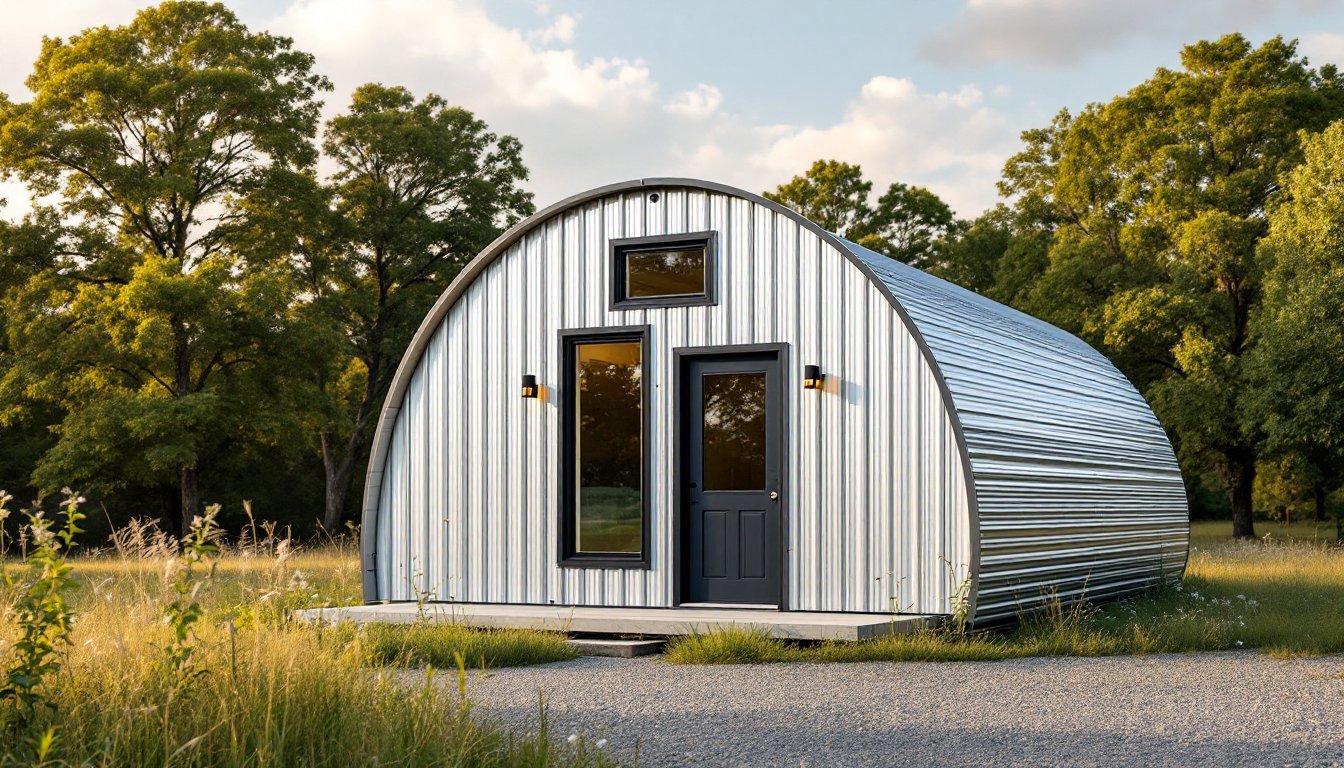
A quonset hut is a prefabricated, self-supporting structure made from corrugated galvanized steel panels formed into a semi-circular arch. The design eliminates load-bearing interior walls, the curved shell itself carries wind and snow loads directly to the foundation. This makes them incredibly strong per pound of material and fast to erect.
Modern manufacturers sell quonset kits in widths from 14 to 100+ feet, but small residential models typically run 20 to 30 feet wide and 30 to 50 feet long. Panels bolt together with minimal tools, and most small kits can be assembled by two people in a long weekend once the foundation is ready.
Their popularity stems from three factors: low upfront cost, extreme durability, and speed of construction. Steel doesn’t warp, split, or attract termites. The arch shape naturally deflects wind and sheds precipitation, which is why you still see these buildings standing decades after installation. For homeowners in areas prone to hurricanes, heavy snow, or high winds, that structural integrity is a serious advantage.
You’ll also find them embraced by the minimalist and tiny home communities, especially those pursuing off-grid living or alternative housing models highlighted in outlets like modern home design. The aesthetic is undeniably industrial, but with insulation and interior finishing, they can feel as cozy as a conventional home.
Benefits of Choosing a Small Quonset Hut for Your Home
Material efficiency: The arched geometry uses less steel per square foot of enclosed space than a traditional framed structure. That means lower material costs and faster shipping.
No interior load-bearing walls: You can partition the interior but you like without worrying about structural concerns. Want to move the bedroom wall in five years? Go ahead.
Low maintenance: Galvanized steel resists rust for decades. No painting, no siding repairs, no flashing to replace. Inspect fasteners and seals annually, and you’re done.
Weather resistance: The smooth, curved surface offers minimal resistance to wind. Snow slides off naturally. In areas with heavy snowfall or coastal storms, this reduces the risk of roof collapse or wind damage.
Foundation flexibility: Quonset huts can sit on concrete slabs, pier foundations, or even gravel pads with a proper base frame. This adaptability works well for uneven terrain or sites where a full basement isn’t practical.
Fast assembly: Once your foundation is in and level, most small quonset kits can be erected in 2–4 days. Compare that to weeks of framing, sheathing, and roofing for stick-built homes.
The trade-off? You’re working with a fixed geometric envelope. Adding windows requires cutting into the steel shell and reinforcing the opening, and the curved walls complicate furniture placement and cabinetry installation. These aren’t dealbreakers, but they do require planning.
Cost Breakdown: What You’ll Actually Spend on a Small Quonset Hut Home
Expect to spend $5,000 to $15,000 for a basic 20×40-foot quonset kit (800 square feet) as of 2026. That includes the steel shell, hardware, and assembly instructions. Larger kits or those with extra features, like insulated panels, multiple endwall openings, or upgraded gauge steel, push toward the higher end.
But the kit is just the beginning. Here’s a realistic breakdown for a turnkey small quonset home:
- Foundation: $2,000–$8,000 depending on site prep, soil conditions, and whether you pour a slab, install piers, or use a gravel pad with treated timber base.
- Insulation and interior framing: $3,000–$10,000. Spray foam is popular but pricey: batt insulation over interior stud walls costs less but reduces usable width.
- Windows and doors: $1,500–$5,000. You’ll need to frame and flash openings in the steel shell, plan on at least two egress windows to meet code if this is a dwelling.
- Electrical and plumbing: $4,000–$12,000 if hiring licensed trades. Off-grid solar and composting toilets can lower or raise this depending on complexity.
- Interior finishes: $5,000–$15,000 for drywall or paneling, flooring, kitchen, and bathroom fixtures.
- HVAC: $2,000–$6,000. Mini-split heat pumps are common: propane or wood heat work well for off-grid setups.
Total estimated cost: $22,500–$71,000 for a finished, livable small quonset hut home. That’s significantly less than conventional construction cost per square foot in most U.S. markets, but regional material prices and labor rates will shift these numbers. Always get local quotes before committing.
Design Ideas and Interior Layouts for Small Quonset Hut Homes
The open span is your biggest asset. Without interior load-bearing walls, you can create any floor plan that fits the footprint. For a 20×40-foot shell, common layouts include:
- Studio loft: Main living area on the ground floor, sleeping loft at one end built on a platform. Leaves the center open and airy. Install a spiral staircase or ship’s ladder to save floor space.
- Single-bedroom layout: Place the bedroom at one end behind a partial wall or curtain. Kitchen and bath along one side, living area in the center. This works well for full-time living.
- Two-bedroom with shared bath: Bedrooms at opposite ends, bathroom and utility core in the middle. Requires careful plumbing layout but maximizes privacy.
For inspiration on maximizing smaller footprints, look at small space living strategies used in urban apartments, many translate well to quonset interiors.
Dealing with curved walls: Built-in furniture works better than freestanding pieces along the perimeter. Consider:
- Low cabinets and shelving along the lower portion of the curve where headroom isn’t an issue.
- Vertical wall panels or furring strips installed floor-to-ceiling to create flat sections for hanging cabinets or artwork.
- Lofted storage in the apex where the ceiling height is greatest.
Lighting: The steel shell blocks natural light, so plan window placement carefully. Transom windows near the roofline bring in daylight without sacrificing wall space. Skylights are an option, but they require custom flashing and careful waterproofing.
Aesthetic: Exposed steel and minimalist finishes lean industrial. If you prefer a warmer look, try tongue-and-groove wood paneling on interior walls or ceilings. Many country-style home ideas incorporate reclaimed wood and vintage fixtures that soften the hard lines of metal structures.
Insulation and Energy Efficiency: Making Your Quonset Hut Comfortable Year-Round
Bare steel conducts heat rapidly, so insulation is non-negotiable if you’re living in the structure. Without it, your quonset hut will bake in summer and freeze in winter.
Spray foam insulation is the most common solution. Closed-cell foam provides both thermal resistance and moisture barrier in one pass, with R-values around R-6 to R-7 per inch. A 3-inch application gets you to R-18 to R-21, adequate for moderate climates. Cold-climate builders often go 4–5 inches. Spray foam also seals the seams between steel panels, reducing air infiltration.
Cost: Expect $2.50–$4.50 per square foot installed for closed-cell foam. For an 800-square-foot shell (walls and ceiling combined roughly 1,200 square feet of surface), budget $3,000–$5,400.
Alternative: Batt insulation over interior framing. Install 2×4 or 2×6 stud walls a few inches inside the steel shell, fill cavities with fiberglass or mineral wool batts, then cover with drywall or paneling. This approach costs less but reduces interior width and requires a separate vapor barrier to prevent condensation on the cold steel.
Radiant barrier: Some builders staple reflective foil-faced bubble wrap or radiant barrier directly to the inside of the steel before adding insulation. This reduces radiant heat gain in summer but isn’t a substitute for proper insulation.
Ventilation: Steel structures can trap moisture if not properly vented. Install soffit and ridge vents or use gable-end vents to promote airflow between insulation and steel. Mechanical ventilation (bath fans, range hoods) is critical in a tight, insulated space.
HVAC options: Mini-split heat pumps are efficient and don’t require ductwork, ideal for open floor plans. Propane or wood stoves work well for off-grid or rural sites. Avoid relying solely on electric resistance heat: operating costs will be high.
Permitting, Zoning, and Building Considerations Before You Start
Don’t assume quonset huts are exempt from building codes. If you’re using it as a dwelling, most jurisdictions will require:
- Building permit: You’ll submit plans showing foundation, framing, electrical, plumbing, insulation, and egress windows. Some building officials are unfamiliar with quonset construction, so be prepared to provide engineering documentation from the kit manufacturer.
- Engineered foundation: Helical piers, slab-on-grade, or frost-protected shallow foundations are common. Soil reports may be required depending on local frost depth and bearing capacity.
- Egress requirements: The International Residential Code (IRC) mandates at least one egress window per sleeping room, with minimum clear opening dimensions. Basement or loft sleeping areas need compliant egress or emergency escape.
- Electrical inspection: All wiring must meet National Electrical Code (NEC) standards. DIY electrical is legal in some states if you’re the homeowner and pull your own permit, but hire a licensed electrician if you’re uncertain.
- Plumbing permit: Required for any water supply or waste lines. Septic systems need separate permitting and soil testing.
Zoning: Check local zoning ordinances for:
- Minimum dwelling size: Some municipalities set minimum square footage for single-family homes (commonly 600–1,000 square feet).
- Setbacks and lot coverage: Your quonset must meet side, front, and rear setback requirements.
- Appearance standards: A few jurisdictions restrict “industrial” or “agricultural” structures in residential zones. Provide renderings showing finished siding or landscaping if challenged.
- Permanent vs. temporary: If classified as a temporary or accessory structure, you may face time limits or restrictions on use as a primary residence.
Structural concerns: Quonset kits are engineered for specific wind and snow loads. If your site exceeds the manufacturer’s rated loads, you may need to add interior columns or upgrade to a heavier gauge steel. Consult a structural engineer if in doubt.
Financing: Conventional mortgages rarely cover quonset homes due to appraisal challenges. Owner financing, construction loans, or cash purchases are more common. If resale value matters, factor that in.
Conclusion
Small quonset hut homes deliver durability, speed, and affordability that’s hard to match with traditional construction. They’re not for everyone, furniture layout takes creativity, permitting can be a slog, and the industrial look won’t please every neighbor. But if you’re comfortable with a little problem-solving and want a home that’ll outlast most stick-frame houses at a fraction of the cost, a quonset hut is worth serious consideration. Do your assignments on local codes, budget realistically for insulation and finishes, and you’ll end up with a resilient, efficient space built to weather decades.