Table of Contents
TogglePicking the right screen size for a home theater isn’t about buying the biggest display that fits. It’s about matching dimensions to your room layout, seating distance, and resolution so viewers actually enjoy watching without neck strain or pixelation. Too small and the immersive experience falls flat. Too large and the image quality suffers, or viewers feel like they’re sitting front-row at a multiplex. This guide walks through the calculations, trade-offs, and practical considerations that ensure a screen size delivers cinematic impact without buyer’s remorse.
Key Takeaways
- The ideal home theater screen size balances viewing distance, room dimensions, and resolution—using the formula of viewing distance divided by 1.5 to 2.5 provides a practical starting point.
- 4K resolution supports larger screens without pixelation, making an 85-inch 4K display at 8 feet look crisp, whereas the same size in 1080p appears soft.
- Screen placement must account for ceiling height (keeping vertical dimension under two-thirds of wall height), seating layout, and obstructions like vents and doorways to ensure comfort and functionality.
- Pixel density matters significantly; a 110-inch projector screen spreads pixels over four times the area of a 55-inch TV, requiring greater seating distance to avoid softness.
- Avoid common mistakes like ignoring aspect ratio, overlooking mounting weight requirements, and buying for the showroom instead of your actual living room—mock up dimensions with painter’s tape before purchase.
- Larger screens require better ambient light control and adequate projector brightness; consider blackout curtains, ALR screens, or automated lighting to prevent washout and maintain picture quality.
Why Screen Size Matters for Your Home Theater Experience
Screen size directly impacts immersion, viewing comfort, and how the eye processes detail. A properly sized screen fills the viewer’s field of vision without forcing head movement to track action across the frame. That sweet spot creates the theater sensation, where peripheral distractions fade and the content takes over.
Go too small, and viewers squint at details or lose interest. Go too large, and the eye picks up compression artifacts, motion blur, or individual pixels. The screen should match the resolution of the content being played. A 120-inch diagonal screen paired with 1080p content from ten feet away will look soft: the same size with 4K content at the same distance looks sharp.
Room acoustics also shift with screen size. A wall-dominating screen often requires repositioning speakers or adjusting audio delays to maintain sync between image and sound. Larger screens may block wall-mounted speakers or force a shift to in-ceiling or floor-standing options.
Beyond the technical, screen size sets expectations. A modest 80-inch display in a dedicated theater room reads as underwhelming. The same size in a multipurpose family room feels generous. Context matters as much as the tape measure.
How to Calculate the Ideal Screen Size for Your Room
The Viewing Distance Formula: Finding Your Sweet Spot
The most reliable starting point is the viewing distance formula, which ties screen size to how far viewers sit from the display. For a cinematic experience, the Society of Motion Picture and Television Engineers (SMPTE) recommends a viewing angle of 30 degrees, while THX suggests 36 to 40 degrees for true immersion.
Here’s the simplified calculation:
Screen Width (inches) = Viewing Distance (inches) ÷ 1.5 to 2.5
For example, if the primary seating is 10 feet (120 inches) from the screen:
- At 1.5: 120 ÷ 1.5 = 80 inches (more immersive)
- At 2.5: 120 ÷ 2.5 = 48 inches (conservative)
Most home theaters land somewhere in the middle. A 65- to 75-inch diagonal works well for 10-foot viewing distances with 4K content. If the screen is a projector setup, measure to the center of the seating row, not the back wall.
Resolution plays a role here. 4K displays pack four times the pixels of 1080p, so viewers can sit closer without seeing pixelation. That means a larger screen is viable at the same distance. Some viewing distance recommendations adjust ratios based on resolution to maximize sharpness.
Room Dimensions and Seating Layout Considerations
Viewing distance isn’t the only constraint. The room itself imposes limits, ceiling height, wall width, and furniture layout all factor in.
Start with the screen wall width. Subtract at least 12 inches on each side for speaker placement or wall clearance. If the wall is 12 feet wide (144 inches), the maximum practical screen width is around 120 inches. That translates to roughly a 135-inch diagonal in a 16:9 aspect ratio.
Next, check ceiling height. A screen’s vertical dimension shouldn’t exceed two-thirds of the wall height to maintain proportional balance and leave room for overhead lighting or in-ceiling speakers. For an 8-foot ceiling (96 inches), keep the screen height under 64 inches, roughly a 114-inch diagonal in 16:9.
Seating layout matters too. Multiple rows require sightline planning. The bottom edge of the screen should sit at or slightly above eye level for the front row, while the top edge remains visible to back-row viewers without excessive neck tilt. Tiered seating or a slightly elevated screen mount solves this, but it’s worth measuring before committing to a size.
Consider doorways, windows, and HVAC vents. A screen that blocks a return air vent or swings into a door path creates headaches. Measure twice, mount once.
Balancing Screen Size with Resolution and Picture Quality
A big screen with low resolution looks worse than a smaller screen with sharp content. Resolution and screen size are partners, not competitors.
4K (3840 × 2160 pixels) has become the standard for home theater. It supports larger screens at closer distances without visible pixels. An 85-inch 4K display at 8 feet looks crisp: the same size in 1080p shows softness and artifacts.
8K (7680 × 4320 pixels) offers four times the detail of 4K, but native content is scarce as of 2026. For most DIYers, 4K is the practical ceiling unless the screen exceeds 100 inches diagonal and the budget allows for an 8K projector or display.
Brightness and contrast also scale with size. A projector-based system throwing an image onto a 150-inch screen needs adequate lumens to maintain color saturation and black levels. Ambient light control becomes critical. Blackout curtains, matte wall paint, or an ALR (ambient light rejecting) screen prevent washout.
For those exploring smart home technology, automated lighting and motorized shades can sync with playback to optimize viewing conditions. Larger screens benefit more from these integrations since light bleed is more noticeable.
Finally, pixel density matters. A 55-inch 4K TV and a 110-inch 4K projector have the same pixel count, but the projector spreads those pixels over four times the area. Up close, the projector image looks softer. That’s why projectors work best in larger rooms where seating distance compensates.
Common Screen Size Mistakes to Avoid in Your Setup
Ignoring the aspect ratio. Most modern content is 16:9, but some classic films are 2.35:1 (cinemascope). A fixed 16:9 screen will letterbox wider content, wasting vertical space. Anamorphic lenses or masking systems solve this, but they add cost and complexity. Decide on aspect ratio before committing to a screen size.
Forgetting about screen gain. Projector screens have a gain rating, how much light they reflect. A gain of 1.0 is neutral. Higher gain (1.3–1.8) boosts brightness but narrows the viewing angle. Lower gain (0.8) spreads light evenly but requires a brighter projector. Match gain to room conditions and seating width.
Overlooking mounting and clearance. A 100-inch screen needs room to breathe. Wall studs must support the weight, especially for heavy fixed-frame screens or large flat-panels. Locate studs with a stud finder and use lag bolts rated for the load. For projectors, ceiling joists must accommodate the mount and any sag over time. If unsure about load-bearing capacity, consult a professional.
Not accounting for screen material and texture. Matte white screens are standard, but grey screens improve black levels in rooms with ambient light. Acoustically transparent screens allow in-wall speakers to sit behind the display, but they may reduce sharpness slightly. Product testing reviews can help compare materials for specific use cases.
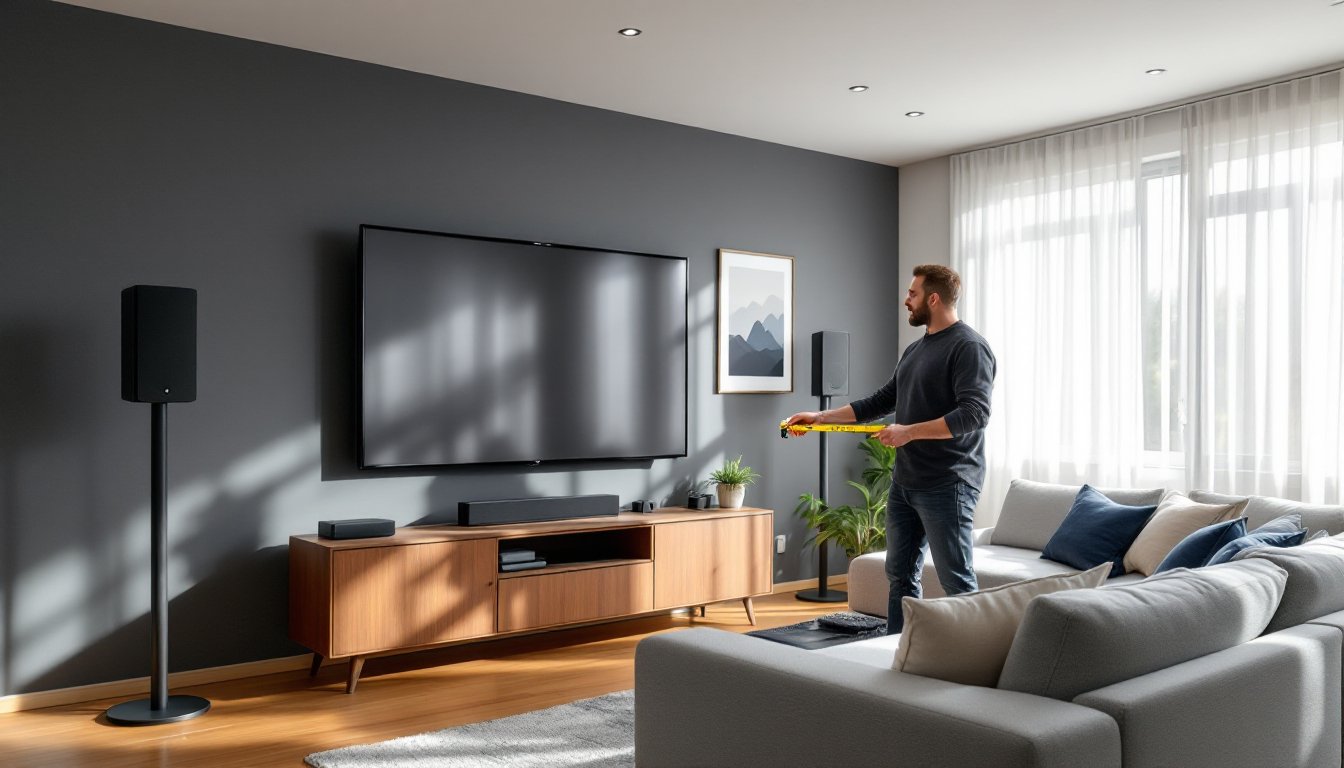
Buying for the showroom, not the living room. A massive screen looks impressive in a big-box store with high ceilings and controlled lighting. At home, that same size can overwhelm a smaller room or clash with existing furniture. Mock up the dimensions with painter’s tape on the wall before ordering. Live with the outline for a few days to confirm it feels right.
Conclusion
Choosing the right home theater screen size comes down to math, room layout, and honest assessment of how the space will be used. Measure seating distance, check wall and ceiling dimensions, and match resolution to screen size. Avoid the temptation to max out on diagonal inches without considering pixel density, mounting logistics, and viewer comfort. A well-sized screen delivers immersion without compromise, and that’s the goal.