Table of Contents
ToggleA home theater popcorn machine isn’t just a nostalgic novelty, it’s a functional addition that brings the full cinema experience into your media room. Unlike countertop air poppers meant for quick snacks, dedicated theater machines produce that authentic hot-oil flavor and aroma moviegoers expect. They also serve as a visual focal point in a themed space. But choosing the right machine requires understanding capacity, installation requirements, electrical demands, and maintenance realities. This guide walks through the types, sizing considerations, setup logistics, and upkeep so homeowners can make an well-informed choice before committing floor space and outlet capacity to a machine that’ll see serious use.
Key Takeaways
- A home theater popcorn machine delivers authentic cinema flavor using oil-based kettles and includes warming decks that keep popcorn at serving temperature for 30–60 minutes, making it ideal for staggered seating or back-to-back movies.
- Most home theater popcorn machines draw 500–1500 watts on standard 120V circuits, so verify your theater’s existing electrical load to avoid tripping breakers when running alongside projectors and sound systems.
- Countertop models suit compact spaces at 18–24 inches wide, while vintage cart-style machines require 30–36 inches of clearance and work better in larger rooms with dedicated floor space.
- Kettle sizing follows a simple rule: 1 oz of kernels produces roughly 1 quart of popped corn, so an 8 oz kettle works for a six-seat theater while a 12 oz kettle handles larger groups or multiple servings.
- Daily post-use cleaning prevents oil carbonization by wiping the kettle interior and glass panels, monthly descaling with vinegar removes mineral deposits, and promptly replacing worn components ensures safety and warranty protection.
Why Every Home Theater Deserves a Popcorn Machine
The sensory cues matter. Fresh popcorn smell triggers anticipation, and the sound of kernels popping adds to pre-show excitement. A dedicated machine positioned near the theater entrance mimics the commercial cinema flow and keeps cooking smells and noise separated from seating areas.
From a practical standpoint, home theater machines use oil-based popping kettles that deliver richer flavor than air poppers. Most models include warming decks that hold popped corn at serving temperature for 30–60 minutes without drying it out. That’s critical for staggered seating or multiple back-to-back movies.
Space planning benefits from having a designated prep zone. Machines with built-in storage compartments keep kernels, oil, salt, and seasoning organized in one spot instead of scattered across a kitchen pantry. For homeowners investing in projection systems, acoustic treatments, and tiered seating, a popcorn machine completes the immersive environment and justifies the room’s single-purpose design.
Electrical capacity is straightforward. Most home models draw 500–1500 watts, comparable to a coffee maker. They run on standard 120V, 15-amp circuits, so no special wiring is typically required. Check your theater’s existing outlet load to avoid tripping breakers when running the machine alongside projectors, receivers, and subwoofers simultaneously.
Types of Home Theater Popcorn Machines
Countertop Popcorn Makers
Countertop machines sit directly on a bar cart, media console, or built-in counter. They range from compact 6–8 oz kettle models (producing roughly 3 quarts per batch) up to 12–16 oz kettles (7–10 quarts). Kettle size refers to unpopped kernel capacity, not finished popcorn volume.
These units typically measure 18–24 inches wide, 12–15 inches deep, and 20–24 inches tall. Glass or acrylic panels on three sides provide visibility and theater aesthetics. Most include a stainless steel kettle with a built-in stirrer and heating element, plus a warming light mounted in the cabinet roof.
Countertop machines work well in compact theaters or bonus rooms where floor space is limited. They require a stable, heat-resistant surface and clearance above for ventilation, manufacturer specs usually call for 6–12 inches of open space. Many homeowners integrate them into custom millwork or bar areas with dedicated electrical drops.
For those evaluating different models, recent popcorn maker reviews highlight oil-based countertop units as the closest match to commercial cinema taste.
Vintage Cart-Style Machines
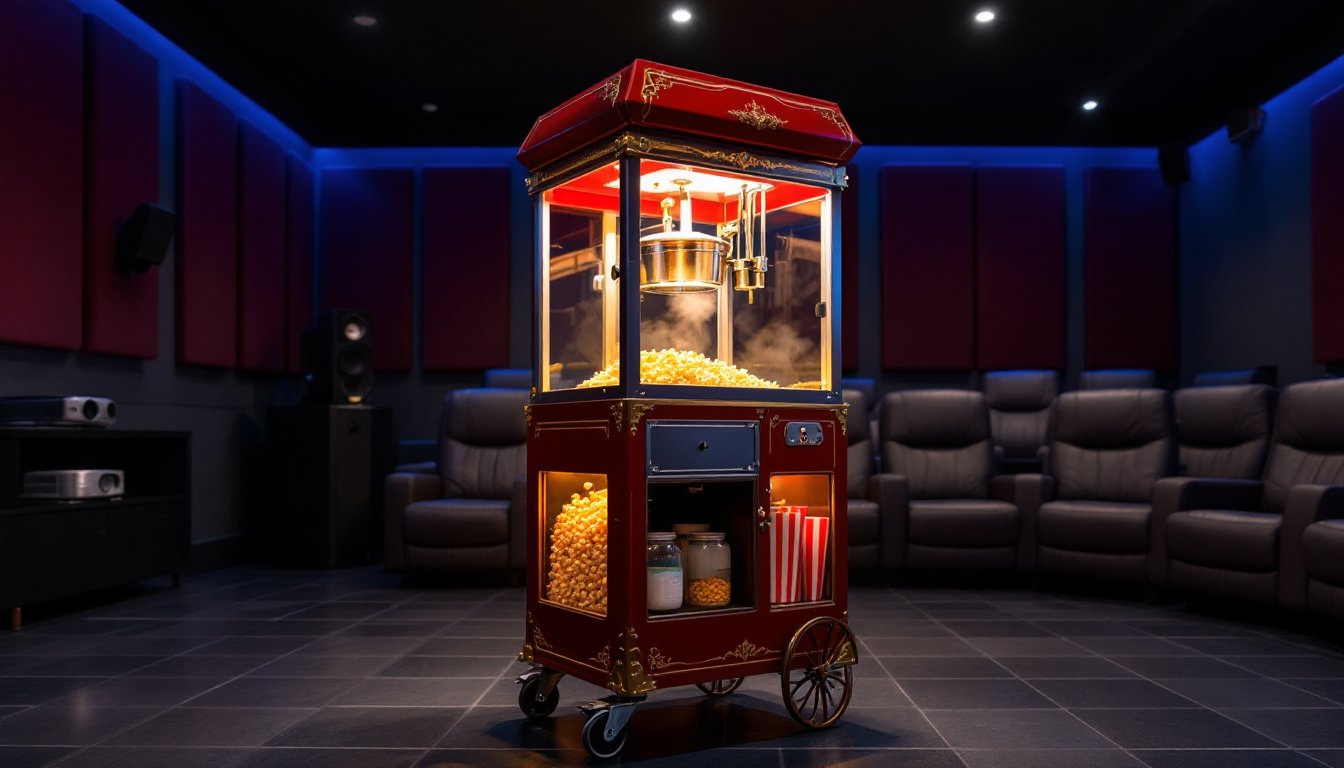
Cart-style machines replicate the classic movie theater look with a wheeled base, often finished in powder-coated steel with chrome or brass accents. The upper cabinet houses the kettle and warming deck, while the cart provides storage for supplies and a work surface for filling bags or bowls.
Typical dimensions: 20–26 inches wide, 16–20 inches deep, and 55–68 inches tall (including cart). Kettle sizes match countertop models, but the added height and footprint demand more room. Wheels (usually 3–5 inch casters, sometimes locking) allow repositioning, though most homeowners anchor them in place once a theater layout is finalized.
Cart machines require floor-level planning. In carpeted theaters, casters can leave impressions or snag on deep pile. Some builders install a dedicated tile or vinyl pad beneath the machine to protect flooring and ease cleaning. Electrical cords on wheeled units need slack for movement but should be routed to avoid trip hazards, consider a floor-mounted receptacle or cord management channel along baseboards.
Choosing the Right Popcorn Machine for Your Space
Seating capacity drives kettle size. A standard rule: 1 oz of kernels produces roughly 1 quart of popped corn. An average moviegoer consumes 4–6 cups (1–1.5 quarts). For a six-seat theater, an 8 oz kettle yields enough for one full round: a 12 oz kettle handles larger groups or second servings without repopping.
Measure your available footprint carefully. Cart machines need 30–36 inches of clearance on the service side for loading, cleaning, and serving. Countertop units need access from the front and enough depth that cabinet doors (if present) don’t block walkways when open. In narrow hallways or alcoves, side-access models work better than front-loading designs.
Ventilation is non-negotiable. Popcorn machines release steam and oil vapor. Dedicated theater rooms with HVAC returns can handle this, but finished basements or converted bedrooms may need a ceiling vent fan or open door during operation. Moisture buildup can damage drywall, acoustic panels, and electronics. Check manufacturer recommendations for CFM requirements if installing in a sealed room.
Electrical planning should account for peak load. If your theater runs on a single 15-amp circuit shared with a projector (300–400W), AVR (100–200W), and subwoofer (500W), adding a 1200W popcorn machine risks overloading. Consider a dedicated circuit or time your popcorn prep before firing up all equipment.
Noise level varies by model. Kettle-stirring motors and circulation fans generate 50–65 dB, noticeable but not intrusive. Schedule popping during previews or between films rather than mid-movie. Some homeowners position machines in an adjacent prep room or hallway to isolate sound.
Installation and Setup Tips for Your Home Theater
Start by testing the machine in its intended location before final placement. Plug it in, run a batch, and verify that heat, steam, and noise levels are acceptable. Check for thermal clearance: popcorn machines exhaust hot air from top vents, and nearby fabric panels, curtains, or wood trim can scorch if positioned too close.
For built-in installations, frame a niche or alcove with the machine’s dimensions plus 2–3 inches on all sides. Use fire-rated drywall or cement board behind and above the unit if embedding it into combustible framing. Run electrical before finishing walls, GFCI-protected outlets aren’t typically required since these aren’t wet locations, but local code may vary.
Leveling matters for cart machines and countertop models. An unlevel kettle causes uneven heating and oil pooling, leading to burnt kernels on one side and unpopped duds on the other. Use a bubble level and shim casters or adjust feet until the kettle sits flat.
Supply storage should be adjacent. Keep popcorn kernels in airtight containers (moisture ruins popping performance), coconut oil or popcorn-specific oil (higher smoke point than vegetable oil), and fine-grain salt. Bulk supplies fit in base cabinets or pull-out drawers within arm’s reach of the machine.
Those exploring smart home integration can reference technology-focused sites like Tom’s Guide for ideas on adding outlet timers, app-controlled switches, or voice-activated prep stations, though most popcorn machines are purely manual appliances.
Test the circuit under full theater load. Run the popcorn machine, projector, sound system, and lighting simultaneously. If breakers trip, redistribute devices across circuits or upgrade your panel.
Maintenance and Cleaning Best Practices
Daily cleaning after each use prevents carbonized oil buildup. Allow the kettle to cool for 10–15 minutes, then wipe interior surfaces with a damp microfiber cloth and mild dish soap. Avoid abrasive pads that scratch stainless steel. Remove the kettle if your model allows it, most hang on a pivot bracket and lift off once the stirring arm is detached.
Glass panels attract grease and fingerprints. Clean with glass cleaner and a lint-free cloth after every session. Streaks and smudges are highly visible under theater lighting. For acrylic panels, use plastic-safe cleaners, ammonia-based products cause clouding.
Weekly deep cleaning involves the warming deck, crumb tray, and exterior. Pull the crumb tray (usually a slide-out metal pan at the cabinet base) and dump unpopped kernels and debris. Wash in hot soapy water and dry completely before reinserting. Wipe down the warming deck with degreaser to remove oil film.
Descale the kettle monthly if using hard water for steam or cleaning. Mineral deposits reduce heating efficiency. Run a 50/50 white vinegar and water solution through a heat cycle (no kernels), let it sit for 15 minutes, then rinse and dry. This also neutralizes rancid oil odors.
Lubricate moving parts quarterly. The stirring motor and kettle pivot points benefit from a drop of food-grade mineral oil. Avoid petroleum-based lubricants that can contaminate popcorn. Check manufacturer guidelines, some sealed motors require no maintenance.
Replace worn components promptly. Cracked glass panels, burnt-out warming bulbs, and frayed power cords are safety hazards. OEM parts are usually available direct from manufacturers or specialty appliance retailers. Attempting to retrofit generic hardware voids warranties and risks electrical or fire code violations.
For homeowners who enjoy hands-on projects, sites like Popular Mechanics offer tutorials on small appliance repair, though popcorn machines with heating elements should be serviced by qualified technicians if internal electrical work is needed.
Storage between seasons: If the theater sees infrequent use, unplug the machine, clean thoroughly, and cover with a breathable cloth to prevent dust accumulation. Avoid plastic covers that trap moisture.