Table of Contents
ToggleLos Angeles homeowners are transforming spare bedrooms, garages, and basements into dedicated cinema spaces that rival commercial theaters. With streaming services offering 4K and Dolby Atmos content, and home theater equipment becoming more accessible, the gap between a multiplex and a home setup has never been smaller. But installing a proper home theater isn’t just mounting a TV and calling it done, it requires careful planning, quality equipment, acoustic treatment, and often some electrical work. Whether the goal is a modest family movie room or a true reference-grade theater, understanding what’s involved helps homeowners avoid expensive mistakes and get a system they’ll actually use for years.
Key Takeaways
- Home theater installation in Los Angeles has become increasingly practical and affordable, with 4K projectors and immersive audio systems delivering cinema-quality experiences at a fraction of commercial theater costs.
- Proper planning is essential: measure your room, choose a windowless or low-light space with dedicated electrical circuits, and ensure ceiling height accommodates your display choice (8+ feet for projectors).
- A quality audio system should start at 5.1 channels (left, center, right, two surrounds, subwoofer) and upgrade to 7.1.2 or 7.1.4 for modern Dolby Atmos and DTS:X immersive formats.
- DIY installation works for equipment setup and mounting, but hire licensed electricians for new circuits and professionals for in-wall wiring, acoustic calibration, and structural work to ensure code compliance.
- Budget realistically: entry-level setups cost $3,000–$6,000, mid-tier systems run $8,000–$15,000, and high-end installations exceed $20,000, with LA labor and permit costs running 10–20% higher than national averages.
- Acoustic treatment—such as carpet, heavy drapes, acoustic panels, and bass traps in corners—significantly improves sound clarity and prevents echo in hard-surfaced rooms.
Why Los Angeles Homeowners Are Investing in Home Theaters
The pandemic permanently shifted how people think about entertainment spaces. Going to the movies isn’t what it used to be, tickets cost $15 to $20, parking adds another hassle, and theaters don’t always maintain their equipment. Meanwhile, home theater tech has caught up. A quality 4K projector now costs what a mid-range TV did five years ago, and sound systems deliver immersive audio that used to require a commercial installation.
Los Angeles homes, especially those built in the ’80s and ’90s, often have bonus rooms, converted garages, or finished basements that are underutilized. These spaces translate perfectly into dedicated theaters. Property values in LA remain high, so homeowners are more inclined to invest in features that improve daily life and resale appeal. A well-executed home theater adds functional square footage and becomes a selling point, especially in neighborhoods where entertaining matters.
The streaming landscape also plays a role. With services releasing major films directly to home viewing and offering immersive audio formats like Dolby Atmos, the content quality justifies better playback systems. Home theater upgrades reflect the reality that living rooms with soundbars won’t do justice to modern content.
Planning Your Home Theater Space and Layout
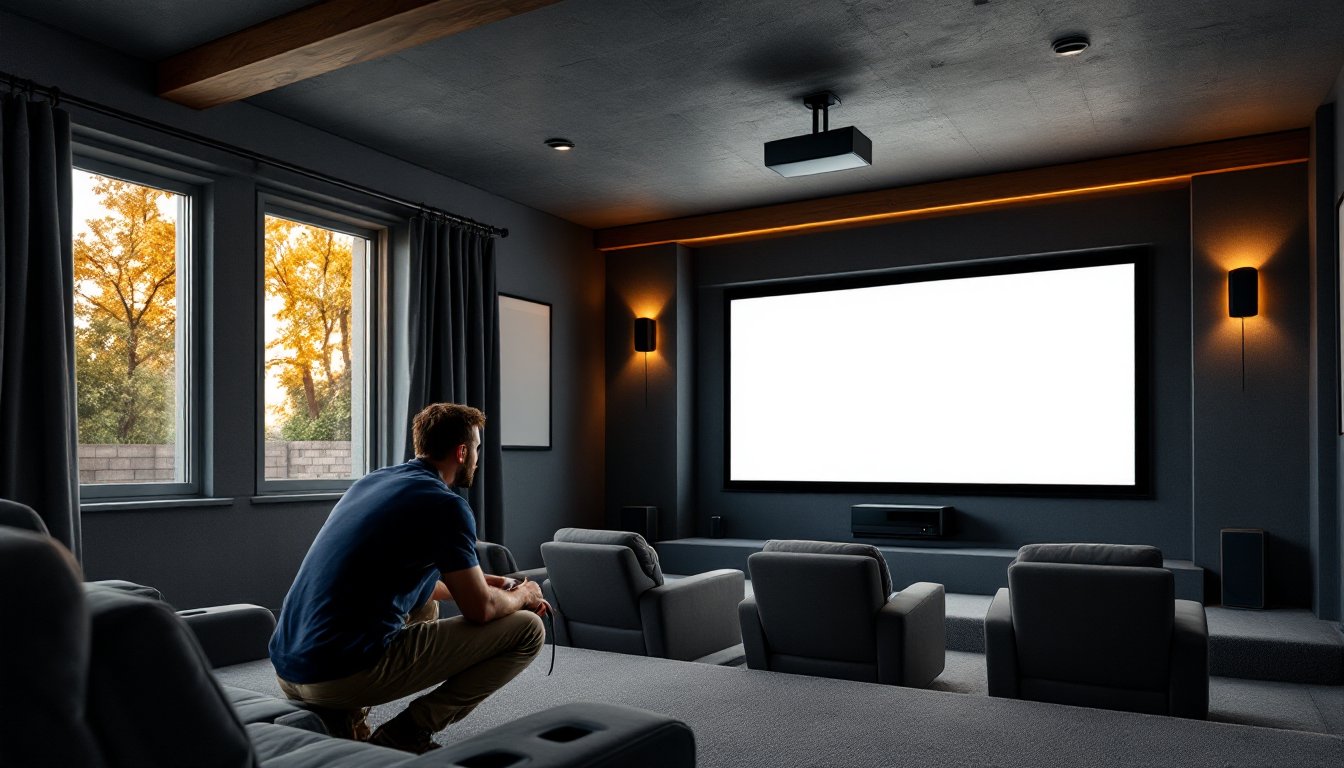
Start by measuring the room and sketching a rough layout. Theater design follows a few basic geometry rules: screen size depends on seating distance, and speaker placement depends on room shape. For a 16:9 aspect ratio screen, the front row should sit roughly 1.5 times the screen width away, and the back row no more than 2.5 times. A 120-inch diagonal screen works well in a room where viewers sit 10 to 15 feet back.
Ceiling height matters for projector mounting and overhead speakers. Most projectors need at least 8-foot ceilings for a clean sight line and proper throw distance. Rooms with low ceilings (under 8 feet) often work better with large flat panels instead of projectors. Check for HVAC vents, recessed lighting, and ceiling joists before committing to mounting points, relocating a vent or cutting into a joist requires planning and sometimes a permit.
Acoustics come next. Hard surfaces (drywall, tile, hardwood) reflect sound and create echo. Carpet, upholstered seating, thick curtains, and acoustic panels absorb mid and high frequencies. Bass traps in corners control low-end buildup. Dedicated acoustic treatment isn’t always necessary, but even modest upgrades, like adding a rug and heavy drapes, improve clarity. Many professionals specializing in smart home technology emphasize balancing aesthetics with acoustic performance.
Choosing the Right Room in Your LA Home
Not every room suits a theater. Ideal candidates are windowless or have minimal natural light, controlling ambient light is critical for projector image quality. Basements work well but are rare in LA due to soil and seismic codes. Spare bedrooms, bonus rooms above garages, and converted dining rooms are more common.
Rooms should have a door for sound isolation. Open-concept spaces bleed noise into living areas and don’t offer the immersive experience of an enclosed theater. Electrical access is another factor, theaters need multiple dedicated 15- or 20-amp circuits for amplifiers, projectors, and powered subwoofers. Running new circuits often requires an electrician and a permit, especially if the panel is distant from the theater space.
Avoid rooms with oddly shaped alcoves, angled walls, or support columns that interfere with sightlines and speaker placement. Rectangular rooms with length-to-width ratios between 1.4:1 and 2:1 distribute sound more evenly and reduce standing waves.
Essential Equipment for a Premium Home Theater Experience
Display: The projector-versus-TV debate depends on room control and budget. A quality 4K projector (like models from Epson, Sony, or BenQ) paired with a 120-inch fixed-frame screen delivers true cinema scale for $1,500 to $4,000. Projectors require a dark room, even modest ambient light washes out the image. Large-format TVs (75 to 85 inches) work better in multipurpose rooms with windows and cost $1,200 to $3,500. OLED and Mini-LED panels offer excellent contrast but can’t match a projector’s scale.
Audio System: A proper surround system starts at 5.1 channels, left, center, right, two surrounds, and a subwoofer. For Atmos and DTS:X, upgrade to 5.1.2 (two height channels) or 7.1.4 (seven ear-level, four overhead). Receivers from Denon, Marantz, and Yamaha decode modern formats and drive passive speakers. Budget $500 to $1,500 for the receiver, $800 to $3,000 for speakers, and $400 to $1,200 for a subwoofer. In-wall and in-ceiling speakers save floor space but require running wire through walls, a job that gets easier during new construction or remodeling.
Seating: Theater recliners with cup holders and USB charging run $400 to $1,200 per seat. Arrange them in rows with risers if the room allows, 12-inch risers are standard for a second row. Risers require framing with 2×4 or 2×6 lumber, plywood decking, and carpet. They’re not structural, but they do need to be level and anchored.
Source Components: A 4K Blu-ray player handles physical media and streams from apps. Apple TV, Nvidia Shield, and Roku Ultra serve as dedicated streaming boxes with better performance than built-in smart TV apps. Reviews from sites like Tom’s Guide help identify models that handle HDR10, Dolby Vision, and high-bitrate audio without hiccups.
Control and Wiring: Universal remotes (Logitech Harmony, Sofabaton) simplify operation. Wiring should be run in-wall using CL3-rated HDMI cables (or conduit for future upgrades). Speaker wire is typically 14- or 16-gauge, depending on run length. Label everything, it’s easy to lose track of which HDMI input goes where.
DIY vs. Professional Installation: What LA Homeowners Should Consider
A motivated DIYer can handle much of a home theater installation, mounting a TV, connecting a receiver, and placing speakers doesn’t require specialized tools beyond a stud finder, level, drill, and wire strippers. Projector mounting and screen installation are straightforward if ceiling joists are accessible. Pre-wired speaker kits simplify setup for those unwilling to fish wire through walls.
But some tasks call for a pro. Running new electrical circuits requires a licensed electrician and a permit in Los Angeles County, especially for dedicated 20-amp lines. In-wall wiring through insulated exterior walls or across fire breaks needs knowledge of building codes and the right tools (fish tape, flex bits). Acoustic calibration, using room correction software like Audyssey or Dirac, benefits from an experienced installer who can measure, tweak, and fine-tune.
If walls need to be opened for wiring or structural changes (like building a riser platform or adding ceiling-mounted speakers), a general contractor or specialized AV installer saves time and ensures code compliance. Los Angeles has strict seismic and fire safety codes, so modifications to load-bearing walls or ceiling penetrations need approval. Many qualified home theater installation professionals offer bundled services that include design, equipment, labor, and calibration.
Cost is the final consideration. A full professional install for a mid-tier system runs $5,000 to $15,000 in labor alone, not including equipment. DIY labor is free, but mistakes, stripping wire incorrectly, miscalculating throw distance, or damaging drywall, add hidden costs. Hybrid approaches work well: hire an electrician for circuits and a handyman for in-wall wiring, then handle the equipment setup and calibration personally.
Cost Breakdown: Budgeting for Your Los Angeles Home Theater
Budget expectations vary widely based on room size, equipment quality, and installation complexity. Here’s a realistic breakdown for three tiers:
Entry-Level ($3,000–$6,000):
- 65- to 75-inch 4K TV: $800–$1,500
- 5.1 surround receiver and speaker package: $600–$1,200
- Streaming device and universal remote: $150–$250
- Comfortable seating (non-reclining): $500–$1,000
- Acoustic treatment (rugs, curtains): $200–$400
- DIY installation labor: $0
- Electrical work (if needed): $300–$800
Mid-Tier ($8,000–$15,000):
- 4K projector and 120-inch screen: $2,000–$4,000
- 7.1.2 Atmos receiver and separate speakers: $2,500–$5,000
- Theater recliners (four seats): $1,600–$4,000
- In-wall wiring and basic acoustic panels: $800–$1,500
- Professional calibration and partial install: $1,500–$3,000
- Electrical and carpentry for risers: $800–$1,500
High-End ($20,000–$50,000+):
- Reference-grade projector and motorized screen: $6,000–$15,000
- Separates (preamp, multi-channel amps, premium speakers): $8,000–$20,000
- Custom theater seating with motorized recline: $4,000–$10,000
- Full acoustic treatment and soundproofing: $3,000–$8,000
- Complete professional design and install: $5,000–$15,000
- Home automation integration (lighting, shades, control): $2,000–$5,000
Los Angeles pricing tends to run 10 to 20 percent higher than national averages due to labor costs and permit fees. Materials stay closer to national norms if sourced online. Always get multiple quotes for contractor work, and confirm licenses (C-10 electrical, B general contractor) before hiring.
Conclusion
Building a home theater in Los Angeles doesn’t require a Hollywood budget, but it does demand planning and honesty about what’s feasible. Homeowners who take time to measure spaces, research equipment, and understand code requirements end up with systems they’ll use for years. Whether tackling the project solo or hiring help, the result is a dedicated entertainment space that outperforms any commercial theater, and doesn’t require leaving the house.