Table of Contents
ToggleFarm style kitchen cabinets bring warmth, character, and functional design to one of the home’s most-used spaces. Unlike glossy modern cabinetry that can feel sterile, farmhouse cabinets emphasize natural materials, simple lines, and a lived-in quality that works equally well in century-old homes and new construction. They’re practical, forgiving of everyday wear, and surprisingly adaptable, whether someone’s renovating a 1920s bungalow or softening the edges of a builder-grade kitchen. This guide covers what defines the style, material choices that hold up to real use, and hands-on tips for installation or updates that won’t require hiring out the entire job.
Key Takeaways
- Farm style kitchen cabinets combine natural materials, frame-and-panel construction, and honest design to bring warmth and character to both vintage and new kitchens.
- Painted white or soft gray finishes, paired with solid wood or quality plywood, are the most durable and popular choices for farmhouse cabinet projects.
- Glass-front uppers, open shelving, beadboard paneling, and bin-pull hardware are signature design elements that define authentic farm style cabinetry.
- DIY cabinet updates—from painting and hardware swaps to new installations—are achievable weekend projects when you follow proper prep, priming, and finishing techniques.
- Two-tone color combinations and accent island colors offer a modern farmhouse update while reducing design risk compared to painting an entire kitchen one bold color.
What Are Farm Style Kitchen Cabinets?
Farm style cabinets, also called farmhouse or country cabinets, draw from traditional rural American kitchens where utility came first. These cabinets typically feature frame-and-panel door construction with visible wood grain, recessed or flat panel centers, and minimal ornamentation. The style avoids elaborate moldings or high-gloss finishes in favor of straightforward joinery and honest materials.
Key design elements include:
- Shaker-style doors or simple five-piece frame construction (two vertical stiles, two horizontal rails, and a center panel)
- Exposed or beadboard back panels inside open shelving units
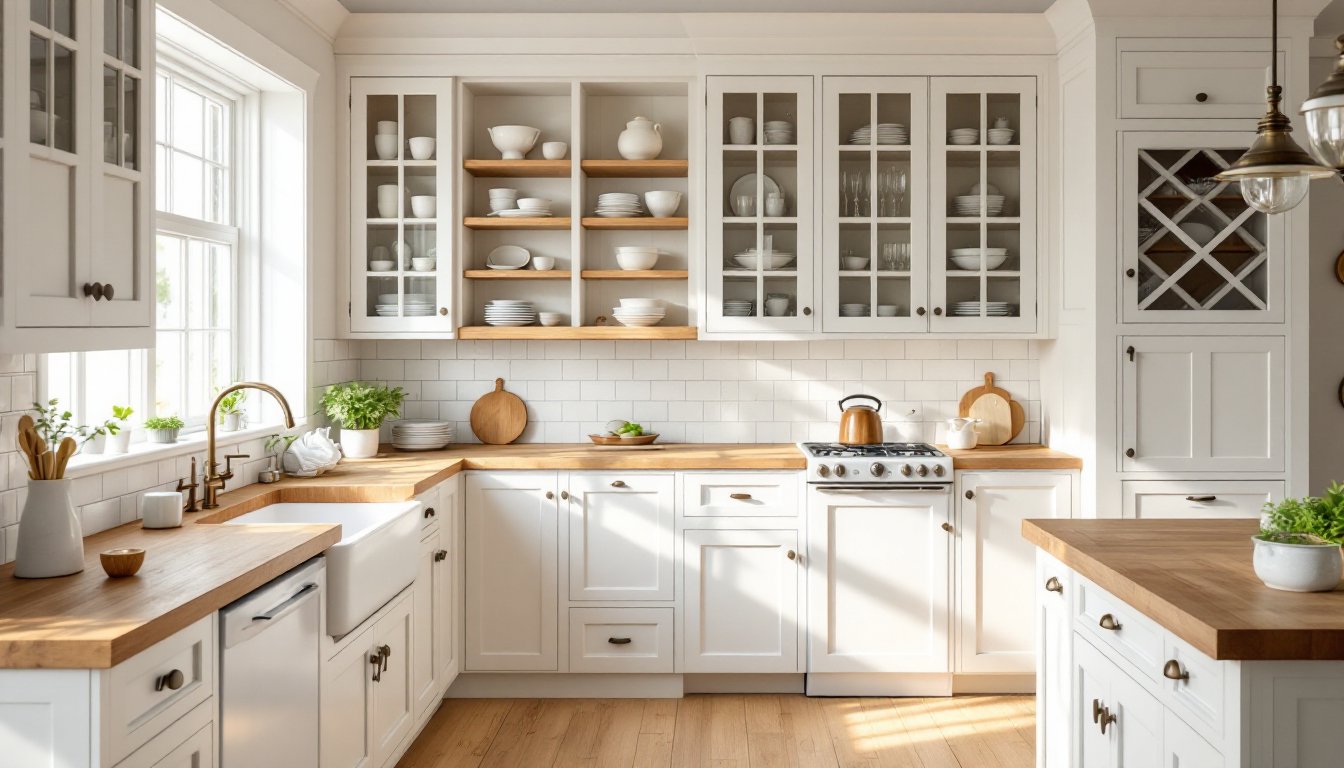
- Open shelving mixed with closed cabinetry for displaying dishes or everyday items
- Apron-front sinks integrated into base cabinet runs (sometimes called farmhouse sinks)
These cabinets often run floor-to-ceiling or stop short of the ceiling to leave room for decorative baskets or crocks on top. Unlike European-style frameless cabinets, farmhouse designs use a face frame, a flat border around the cabinet box opening, which adds traditional detail and reinforces the structure. This face frame approach is standard in North American cabinetry and aligns with most DIY-friendly cabinet projects.
Key Features of Farmhouse Kitchen Cabinets
Several hallmark features separate farmhouse cabinets from contemporary or transitional styles. Recognizing these helps when planning a remodel or identifying what to update in existing cabinetry.
Recessed or Raised Panel Doors: Most farmhouse cabinets use a recessed (flat or slightly inset) center panel framed by stiles and rails. Raised panels appear in more formal farmhouse designs but stay understated compared to traditional ornate styles.
Beadboard or V-Groove Panels: Instead of flat plywood, cabinet ends and island sides often feature beadboard paneling, narrow vertical planks with a small rounded bead between each board. V-groove panels offer a similar texture with sharper lines.
Glass-Front Uppers: At least a few upper cabinets typically swap solid doors for clear or seeded glass inserts, showcasing dishware and adding visual lightness. Mullions (vertical or horizontal dividers within the glass door frame) appear in more detailed farmhouse kitchens.
Plate Racks and Open Shelving: Farmhouse designs often incorporate a plate rack cabinet with vertical slots for storing plates upright, plus at least one run of open floating shelves or upper cabinets with the doors removed.
Inset or Overlay Doors: Traditional farmhouse cabinets use inset doors that sit flush with the face frame, requiring precise installation and adjustment. Budget-friendly or DIY farmhouse projects more often use full-overlay doors that cover most of the face frame, easier to install and adjust, with a cleaner look that still reads as farmhouse when paired with the right hardware and finish.
Choosing the Right Materials and Finishes
Material selection affects both appearance and durability. Farmhouse cabinets lean toward solid wood or wood-veneer plywood rather than thermofoil or laminate, though budget constraints sometimes require mixing materials strategically.
Solid Wood Doors and Face Frames: Oak, maple, cherry, and knotty alder all appear in farmhouse kitchens. Knotty pine or poplar painted finishes offer lower cost while still delivering natural wood texture. For painted cabinets, poplar works well because its tight grain shows minimal imperfections under multiple paint coats. Cabinet-grade plywood (¾-inch nine-ply birch or maple veneer) is standard for box construction.
Painted vs. Stained Finishes: White or off-white painted finishes dominate modern farmhouse kitchens, but two-tone combinations, such as painted uppers with stained wood lowers, add depth. When painting, use a bonding primer (such as shellac-based or high-adhesion acrylic) followed by a semi-gloss or satin water-based alkyd enamel for durability. Expect about 350–400 square feet of coverage per gallon of quality cabinet paint, though multiple coats are required.
Distressed or Glazed Details: Light distressing (sanding edges after painting to reveal underlying wood) and antiquing glaze applied in grooves give cabinets an aged look. This treatment is forgiving for DIYers because it hides minor flaws. Apply glaze sparingly with a brush, then wipe back with a lint-free cloth, leaving residue in recesses.
Reclaimed or Salvaged Wood: Some farmhouse projects incorporate reclaimed barn wood for floating shelves or island panels. Ensure reclaimed lumber is kiln-dried or acclimated indoors for at least two weeks to prevent warping. Sand thoroughly and seal with polyurethane or hardwax oil to prevent splinters and staining.
Popular Color Palettes for Farm Style Cabinets
Farmhouse palettes emphasize neutrals and muted tones rather than bold accent colors. These choices create a calm backdrop that highlights natural textures and vintage accessories.
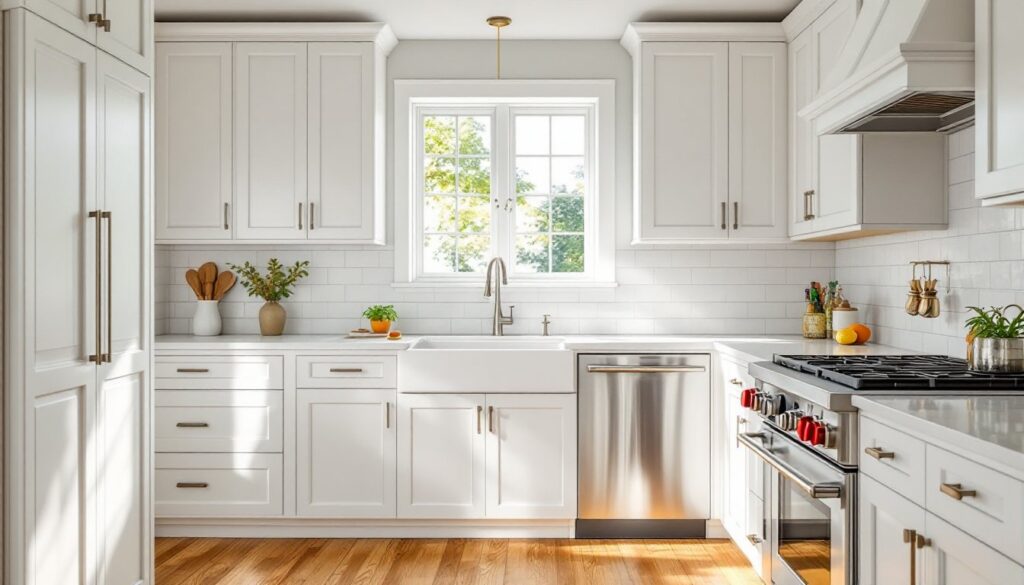
Classic White and Cream: Bright white (such as Benjamin Moore’s Simply White or Sherwin-Williams’ Pure White) remains the most popular choice. Off-white and cream tones (like SW Alabaster or BM White Dove) add warmth without reading as yellow. White cabinets pair well with butcher-block countertops, subway tile backsplashes, and stainless or black appliances.
Soft Grays and Greiges: Light gray (SW Repose Gray, BM Revere Pewter) and greige (gray-beige hybrids) offer a modern farmhouse update. These tones work especially well in kitchens with cooler light exposure or alongside white quartz countertops.
Natural Wood Tones: Medium-toned oak, walnut, or hickory stains bring richness to rustic farmhouse kitchen ideas without requiring paint. Clear satin polyurethane or water-based topcoats preserve the wood grain while providing moisture resistance.
Two-Tone Combinations: Pairing white or light gray uppers with a darker lower cabinet color (navy, forest green, charcoal, or stained wood) defines work zones and adds visual interest. When using two colors, apply the darker tone to base cabinets, dirt and scuffs show less near the floor.
Accent Island Colors: Kitchen islands in sage green, soft blue, or even black create a focal point while keeping perimeter cabinets neutral. This approach limits paint color risk, if the trend fades, repainting one island is easier than redoing an entire kitchen.
Hardware and Accessories That Complete the Look
Cabinet hardware serves as the jewelry of a farmhouse kitchen. The right pulls and knobs reinforce the style, while the wrong choices can make cabinets look generic or mismatched.
Bin Pulls and Cup Pulls: Bin pulls (also called cup pulls), horizontal U-shaped handles that mount with two screws, are quintessential farmhouse hardware. They originated in apothecary and general-store cabinetry. Look for 3-inch or 4-inch center-to-center spacing for drawers: 96mm (roughly 3.75 inches) is a common metric size that works well.
Knobs: Simple round knobs in oil-rubbed bronze, matte black, brushed nickel, or aged brass work for doors. Avoid overly ornate or crystal knobs, which lean traditional rather than farmhouse. Knobs should be 1.25 to 1.5 inches in diameter for proportional scale on standard cabinet doors.
Latches and Hinges: Exposed strap hinges on pantry doors or surface-mount latches add authentic farmhouse detail. For a cleaner look, use concealed European cup hinges (such as Blum or Salice) with soft-close dampers, these aren’t historically accurate but improve function.
Open Shelving Brackets: If incorporating open shelves, use heavy-duty steel L-brackets (rated for at least 200 pounds per pair for 12-inch-deep shelves loaded with dishes) or decorative iron brackets in a scrollwork or simple triangle design. Mount brackets into wall studs with #10 wood screws at least 2.5 inches long for solid support.
Hooks and Racks: Farmhouse kitchens often include wall-mounted peg rails (Shaker-style pegs for hanging utensils or mugs) and pot racks. S-hooks on a ceiling-mounted rack keep cookware accessible and add a working-kitchen aesthetic.
DIY Tips for Installing or Updating Your Cabinets
Installing cabinets from scratch requires patience and precision, but updating existing cabinets is a manageable weekend project for most DIYers. Both approaches benefit from careful prep work.
Updating Existing Cabinets
- Remove Doors and Hardware: Label each door and its corresponding hinge location with painter’s tape and a marker. Store hardware in labeled bags.
- Clean and Degrease: Use TSP substitute (trisodium phosphate alternative) or a degreasing cleaner to remove kitchen grime. Rinse and let dry completely, 24 hours is ideal.
- Sand Surfaces: Lightly sand all surfaces with 150-grit sandpaper to rough up existing finishes for better primer adhesion. Wipe dust with a tack cloth.
- Prime: Apply a bonding primer designed for slick surfaces. Two thin coats beat one thick coat. Allow full cure time (check the product label, often 24 hours).
- Paint: Roll or spray two to three coats of cabinet enamel, sanding lightly with 220-grit between coats once dry to the touch. A foam roller leaves minimal texture: an HVLP sprayer gives the smoothest finish but requires more setup and PPE (respirator with organic vapor cartridges, not just a dust mask).
- Install New Hardware: Drill new holes if changing from knobs to pulls. Use a template or cabinet hardware jig to keep placement consistent. Standard pull placement is centered on drawer fronts: door pulls typically sit 2–3 inches from the top corner.
Installing New Cabinets
Full cabinet installation is more involved but follows a logical sequence.
- Locate Studs: Use a stud finder and mark stud locations on the wall with a level line. Most studs sit 16 inches on center in modern construction, but older homes may vary.
- Start with Uppers: Install upper cabinets first to avoid working over base units. Begin with a corner cabinet or the highest point in the wall (check with a 4-foot level). Use a ledger board, a straight 1×3 or 1×4 temporarily screwed into studs at the cabinet bottom, to support cabinets during installation.
- Shim and Level: Place shims behind cabinets to make them plumb and level in all directions. Drive 3-inch cabinet screws through the cabinet’s hanging rail (the solid wood strip inside the top rear of the cabinet) into wall studs. At least two screws per stud are standard.
- Join Cabinets Together: Clamp adjacent cabinets face-to-face, align doors, then drill pilot holes and join with 2.5-inch cabinet bolts (also called connector bolts) through the face frames or cabinet sides.
- Install Base Cabinets: Set base cabinets in place, shim to level, and screw into studs through the back or mounting strips. Base cabinets should align with upper cabinets and sit level front-to-back and side-to-side before securing.
- Add Toe Kicks and Trim: Finish with toe kick material (usually matching the cabinet finish or a separate board) fastened to the base cabinet legs. Install crown molding at the top if desired, mitering corners with a miter saw for clean joints.
Safety Notes: Cabinets are heavy, upper cabinets filled with dishes can exceed 100 pounds. Always work with a helper when lifting and hanging. Wear safety glasses when drilling overhead, and use a dust mask when sanding.
Conclusion
Farm style cabinets deliver timeless appeal without requiring a full gut-and-remodel budget. Whether painting existing boxes, swapping hardware, or installing new cabinetry, the keys are honest materials, thoughtful color choices, and attention to the details that define the style, frame-and-panel doors, functional open shelving, and hardware that feels purposeful rather than decorative. With the right prep and a weekend or two, most DIYers can update their kitchens with cabinets that feel both welcoming and built to last.