Table of Contents
ToggleRanch homes are known for their long, low profiles and horizontal lines, so a well-designed front deck can add depth, dimension, and serious curb appeal without fighting the architecture. Whether the goal is creating an outdoor room for morning coffee or building a welcoming entry that ties the home to the landscape, a front deck offers flexibility that porches and stoops can’t always match. The beauty of ranch-style architecture lies in its simplicity, which means deck designs need to complement rather than compete. With the right materials, layout, and details, a front deck becomes more than just an entry point, it becomes a functional extension of indoor living and a focal point visitors won’t forget.
Key Takeaways
- Front deck ideas for ranch style homes complement horizontal architecture by adding usable outdoor space without overwhelming the facade’s simplicity.
- Low-profile and wraparound deck designs work best on ranches because they respect the home’s proportions while expanding visual width and creating functional zones.
- Built-in seating and pergola coverage transform front decks into year-round outdoor rooms, especially valuable in hot or rainy climates.
- Pressure-treated lumber ($2–$4 per linear foot) offers affordability, while composite decking ($4–$8) and cedar ($5–$10) provide better durability and lower maintenance for ranch homeowners.
- Always check local building codes for railing requirements, frost footing depths, and permit rules before constructing a front deck on a ranch home.
Why Front Decks Are Perfect for Ranch Style Homes
Ranch homes sit low to the ground with minimal foundation height, which makes them ideal candidates for front decks. Unlike multi-story homes that require tall staircases or elaborate front porches, ranches benefit from decks that hug the ground and stretch horizontally. This design approach respects the home’s original proportions while adding usable square footage.
Front decks can visually widen a ranch facade, breaking up the long horizontal roofline with vertical railings or built-in planters. They also solve practical problems: expanding a cramped entryway, covering cracked concrete stoops, or creating a buffer zone between the front door and the sidewalk.
From a building perspective, front decks on ranches typically require fewer structural adjustments than elevated porches. Many ranch foundations can support ledger board attachment without extensive reinforcement, though local codes should always be checked before starting any deck project. The simplicity of construction makes this a strong DIY project for homeowners comfortable with layout, leveling, and framing, though permit requirements vary by municipality.
Another advantage: ranches often have wide eaves and shallow-pitch roofs that can be extended or paired with pergolas to provide natural shade over front decks. This creates a comfortable outdoor space even in warmer climates where direct sun can make decks unusable midday.
Classic Wraparound Deck Design
A wraparound deck extends beyond the front entry, curving around one or both sides of the home. This design works especially well on ranches with offset entries or L-shaped floor plans, where the deck can follow the roofline and create distinct zones, one for seating, another for potted plants or a small outdoor dining setup.
Construction starts with establishing the deck perimeter and ensuring consistent height across the span. Because wraparound decks cover more ground, frost footings are often required in cold climates to prevent shifting. Joists should run perpendicular to the house, spaced at 16 inches on center for composite decking or treated lumber.
Railings are a key design decision. For a traditional look, square balusters in white or black echo ranch-style architectural details without overwhelming the facade. Cable railing offers a modern alternative with minimal visual interruption, though it requires precise tensioning and may not meet code in homes with young children depending on spacing.
Wraparound decks also increase the home’s connection to the yard. Adding a second set of steps on the side creates access to garden beds, walkways, or driveways, making the deck a true hub rather than just a front stoop replacement. Budget for extra time on layout, getting the angles and transitions smooth where the deck wraps corners requires careful measuring and often a speed square or construction calculator for accurate cuts.
Elevated Front Deck with Built-In Seating
If the ranch sits on a slight slope or has a raised foundation, an elevated front deck (typically 24 to 36 inches above grade) creates opportunities for built-in seating and storage. This design eliminates the need for separate patio furniture and offers clean lines that suit the minimalist aesthetic of ranch homes.
Built-in benches are typically framed with 2×4 or 2×6 lumber, attached to the deck frame or posts for stability. Seat height should be 16 to 18 inches with a depth of at least 15 inches for comfort. Backrests are optional but appreciated, angling them slightly (around 10 degrees) makes long sits more comfortable.
For homeowners adding storage, bench seats can be hinged to lift up, revealing space for cushions, gardening tools, or outdoor toys. Use stainless steel or galvanized hinges rated for exterior use, and consider gas struts to hold lids open safely.
Elevated decks require guardrails if they’re 30 inches or more above grade per most residential building codes (check local IRC amendments). Incorporate the seating into the railing system by using the bench back as a partial barrier, then filling gaps with balusters or tempered glass panels.
Stairs become more prominent on elevated decks. A single wide staircase centered on the deck creates a grand entry, while dual staircases on either side offer symmetry and improve flow. Treads should be at least 10 inches deep with risers no taller than 7.75 inches to meet code and ensure safe footing.
Low-Profile Platform Deck for a Seamless Look
Low-profile platform decks sit just a few inches off the ground, typically 8 to 16 inches, and create a seamless transition from yard to entry. This design is ideal for ranches with minimal foundation height and flat lots. It emphasizes the home’s horizontal lines and keeps the focus on the architecture rather than the hardscape.
Because the deck sits low, railing may not be required depending on local code (usually under 30 inches above grade). This opens up design flexibility: the deck can extend into the yard without visual barriers, blending indoor and outdoor spaces.
Foundation options for low-profile decks include concrete pier blocks set on compacted gravel or helical piers for areas with unstable soil. Avoid placing joists directly on the ground, even treated lumber will rot without airflow. Aim for at least 6 inches of clearance between soil and the underside of joists.
A low deck also simplifies the stair situation. A single broad step or even a gradual ramp (slope no steeper than 1:12 for accessibility) can replace traditional stairs, making the entry more welcoming and easier to navigate with strollers, wheelchairs, or garden carts.
Many farmhouse-inspired designs pair low-profile decks with wide planks in natural wood tones or gray composites, creating a modern but grounded aesthetic. Skip ornate railings and decorative spindles, simplicity is the strength here.
Front Deck with Pergola or Roof Coverage
Adding a pergola or roof structure over a front deck turns it into a true outdoor room. This works especially well on ranches in regions with hot summers or frequent rain, where unshaded decks see limited use.
Pergolas are the lighter option. Built from 4×4 or 6×6 posts with 2×6 or 2×8 rafters, they provide partial shade and a framework for climbing plants or outdoor curtains. Spacing rafters 12 to 16 inches apart creates a balance between shade and airflow. If attaching the pergola to the house, secure a ledger board to wall studs (not just siding) using ½-inch lag screws and flashing to prevent water intrusion.
For full coverage, a gable or shed roof extension requires more structural planning. Consult local building codes, most jurisdictions require permits for roof structures, and some require engineered plans if the span exceeds 12 feet. Roof coverings can match the main house (asphalt shingles, metal panels) or contrast with standing seam metal for a modern touch.
Both options need adequate post footings. Dig below the frost line (varies by region, often 36 to 48 inches in northern climates) and pour concrete footings with embedded post anchors. Don’t skip the gravel base under footings, it improves drainage and reduces frost heave.
Adding a ceiling fan, recessed lighting, or even a porch swing transforms a covered deck into a year-round hangout. Run electrical in weatherproof conduit and follow NEC guidelines for outdoor receptacles (GFCI protection required). If DIY electrical work feels beyond comfort level, hire a licensed electrician, it’s worth the cost for safety and code compliance.
Material and Color Choices That Complement Ranch Architecture
Material choice directly impacts maintenance, longevity, and how well the deck integrates with the home. For ranches, natural wood tones and muted colors tend to work best, respecting the style’s mid-century roots.
Pressure-treated lumber remains the most affordable option. Expect to pay around $2 to $4 per linear foot for dimensional lumber (prices fluctuate with market conditions). It requires regular staining or sealing, plan on maintenance every 2 to 3 years. Use ground-contact rated PT lumber for any framing within 6 inches of soil.
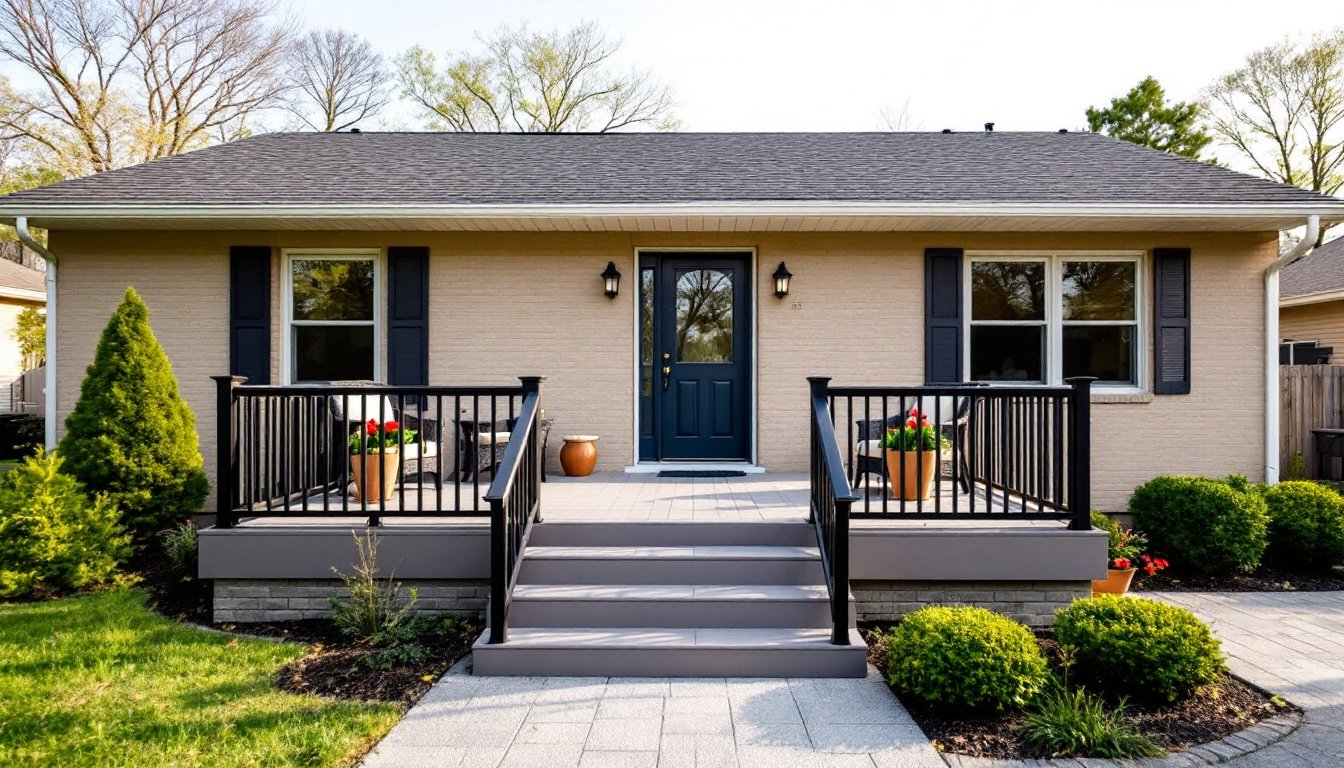
Composite decking (brands like Trex, TimberTech, or Azek) offers low maintenance and consistent color but costs $4 to $8 per linear foot. Composites resist rot, splintering, and fading, making them ideal for homeowners who want to skip the staining routine. Lighter grays and taupes suit ranch exteriors in brick or painted siding, while darker browns pair well with natural wood or stone accents.
Cedar or redwood delivers natural beauty and rot resistance with less chemical treatment. Costs run $5 to $10 per linear foot, and the wood weathers to a silver-gray patina unless sealed annually. It’s a strong choice for those prioritizing aesthetics and sustainability.
Railing material should match or complement the decking. Powder-coated aluminum railings in black or bronze add modern contrast without heavy visual weight. Wood railings stained to match the deck create a cohesive, traditional look. Composite railings eliminate wood maintenance but may feel bulky on smaller decks, test profiles in person before committing.
For homeowners exploring landscape integration, consider extending deck colors into nearby hardscaping, matching stair treads to paver walkways or coordinating planter boxes with deck boards creates visual flow. Paint the front door or shutters in a complementary accent color to tie the deck into the overall design.
Conclusion
A well-executed front deck doesn’t just add square footage, it reshapes how a ranch home interacts with its surroundings. Whether opting for a wraparound layout, built-in seating, or a low-profile platform, the key is respecting the home’s horizontal lines while introducing functional outdoor space. Choose materials that fit the maintenance level and budget, follow local building codes, and don’t skip the prep work. With careful planning and solid construction, a front deck becomes one of the best investments a ranch homeowner can make.