Table of Contents
TogglePlantation style architecture conjures images of sprawling estates with grand columns and wraparound porches. But you don’t need 5,000 square feet and a cotton field to capture that timeless Southern elegance. Small plantation style homes bring the same classic details, symmetry, generous porches, tall windows, into a more manageable footprint. They’re showing up in suburbs, small towns, and infill lots, proving that charm isn’t measured in acreage. Whether you’re building new, renovating, or just adding curb appeal to an existing house, understanding what makes plantation design work at a smaller scale will help you avoid the pitfalls of a theme park facade and create something genuinely livable.
Key Takeaways
- Small plantation style homes capture Southern elegance in 1,200 to 2,500 square feet by prioritizing signature features like covered porches, symmetrical facades, tall windows, and substantial trim details.
- Essential exterior elements include tapered or fluted columns (8-inch square or 10-inch round), 8 to 12-foot deep porches with tongue-and-groove flooring, smooth lap siding, and divided-lite or simulated divided-lite windows at least 6 feet tall.
- Interior design emphasizes open flow with 9 to 10-foot ceilings, panel wainscoting, raised-panel doors, hardwood flooring in wide planks, and crown molding (4.5 inches minimum) to create visual lift and traditional craftsmanship.
- Building or renovating a small plantation style home costs significantly less than full-scale estates while improving energy efficiency, fitting urban and suburban lots, and offering broad resale appeal across demographics.
- DIY upgrades like adding a covered porch, replacing windows with taller proportions, installing decorative columns, and upgrading trim details can transform an existing home’s curb appeal without requiring professional help for finish work.
What Defines a Small Plantation Style Home?
A small plantation style home takes the key proportions and details of antebellum Southern architecture and applies them to a house typically ranging from 1,200 to 2,500 square feet. The style originated in the American South during the 18th and 19th centuries, where climate and social customs shaped design choices, high ceilings for heat management, wide porches for outdoor living, and symmetrical facades that projected order and hospitality.
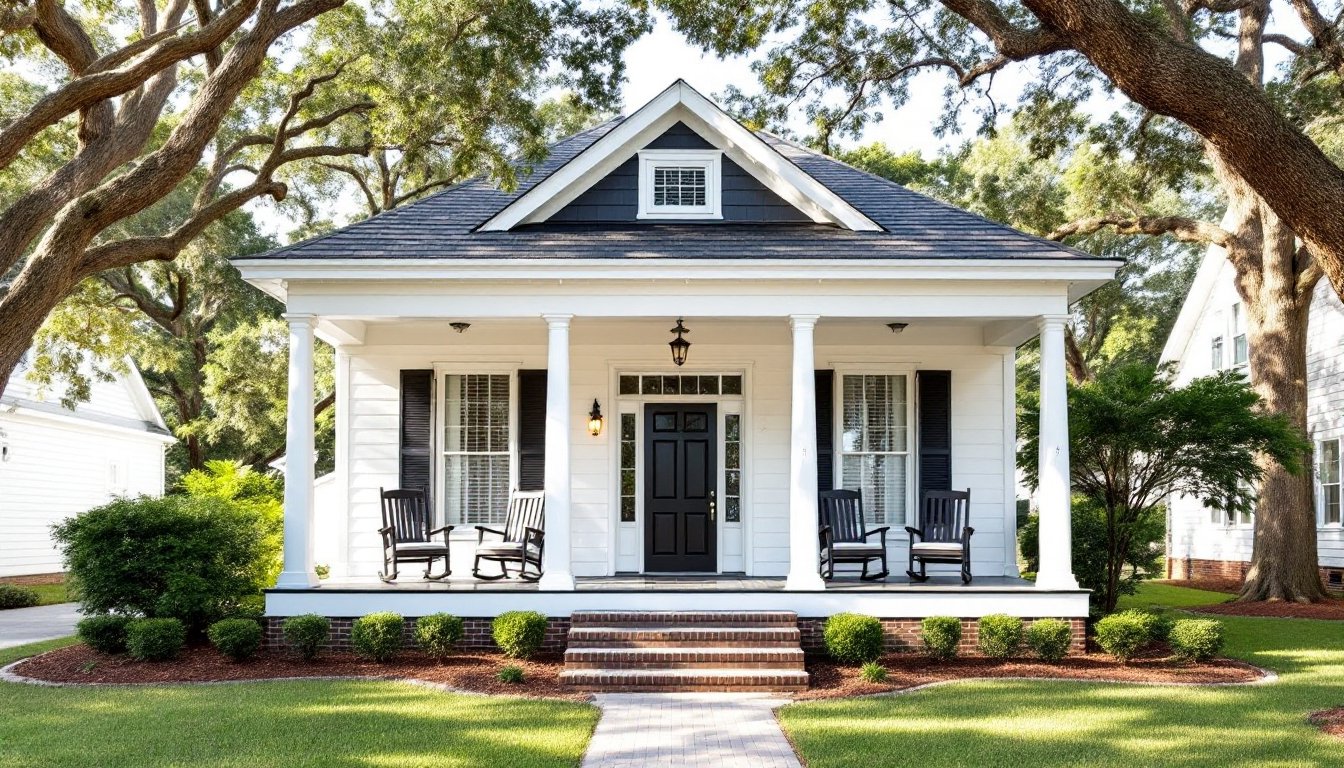
In a smaller home, you’re working with the same visual language but tighter dimensions. That means prioritizing the most recognizable features: a covered front porch supported by columns, a balanced facade with centered entry, and tall windows that create vertical emphasis. You won’t have the luxury of dual staircases or a separate summer kitchen, but the proportions and materials can still evoke the style convincingly.
The key difference between small plantation homes and larger historic examples is editing. A full-scale plantation house might have six to eight columns across the front: a small version uses four or even two, spaced to match the narrower width. The roofline stays low-pitched (typically 4:12 to 6:12), often with a hipped or gabled profile. Interior room counts drop, but ceiling heights, ideally 9 to 10 feet on the main floor, preserve the airy feel that defines the style.
Key Architectural Features That Capture the Look
Exterior Elements and Curb Appeal
Columns and porch construction are non-negotiable. Traditional plantation homes use round or square columns, often made of wood or modern composite materials that mimic painted wood without the maintenance. For a small home, 8-inch square or 10-inch round columns work well, spaced 6 to 8 feet on center depending on your porch width. Tapered columns (wider at the base) add authentic detail but require custom milling or prefab kits.
The porch itself should run at least the width of the main facade, ideally 8 to 12 feet deep to accommodate furniture and foot traffic. Use tongue-and-groove porch flooring (5/4 x 6 nominal decking, actual 1″ x 5.5″) with a slight slope away from the house for drainage. Paint it in a durable porch-and-floor enamel: gloss or semi-gloss hides wear better than flat.
Siding and trim set the tone. Smooth or beaded lap siding (often called clapboard) in 4 to 6-inch exposure reads more traditional than wider planks. Fiber cement products like HardiePlank offer durability and take paint well. Trim should be substantial, 1×6 or 1×8 nominal for window and door casings, with a 1×4 frieze board under the eaves. Paint colors trend toward white, cream, or soft gray for siding, with trim in crisp white or a contrasting darker accent.
Windows are tall and symmetrical, often double-hung with divided lites. True divided lites (individual panes separated by wooden muntins) are authentic but expensive: simulated divided lites (SDL) with interior and exterior grids over a single pane offer a compromise. Plan for windows that are at least 6 feet tall on the first floor to maintain proportion.
Roofing materials include architectural asphalt shingles (25 to 30-year rated) in charcoal or weathered wood tones, or standing seam metal for a more regional look. Metal roofs, common in the South for their heat reflection and longevity, work especially well in humid climates.
Interior Design Characteristics
Inside, plantation style homes emphasize open flow and natural light. Even in a small footprint, aim for a central hall or foyer that establishes symmetry. Rooms should feel connected without being fully open-concept: traditional layouts use wide doorways (ideally 36 inches or more) and transom windows above interior doors to move air and light.
Ceiling height is critical. If you’re working with standard 8-foot ceilings, consider adding crown molding (at least 4.5 inches) and baseboards (5 to 7 inches) to create visual lift. If framing new construction or doing a gut renovation, spec 9-foot ceilings on the main floor, it’s a modest cost increase that pays back in atmosphere.
Flooring leans toward hardwood, oak, pine, or engineered wood in medium to dark stains. Wide planks (5 to 7 inches) suit the style better than narrow strips. In wet areas, luxury vinyl plank (LVP) mimics wood convincingly and handles moisture better than the real thing.
Millwork and trim details distinguish plantation interiors from generic builds. Panel wainscoting (typically 32 to 42 inches high) in dining rooms or hallways adds formality. Raised-panel doors (versus flat slab) on cabinets and interior doors reinforce the traditional look. If budget allows, box beam ceilings or coffered treatments in a primary living space amplify the sense of craftsmanship.
Benefits of Choosing a Smaller Plantation Design
Lower construction and maintenance costs top the list. A 1,800-square-foot plantation-style home costs significantly less to build and heat than a 3,500-square-foot version, yet it delivers the same curb appeal and livability for most households. Smaller roof area means fewer shingles to replace, less gutter to clean, and reduced HVAC load.
Easier permitting and lot fit. Many suburban and infill lots can’t accommodate a sprawling estate, but a compact plantation home fits a standard 50 x 100-foot lot while still leaving room for landscaping. Setback requirements and local zoning codes often favor smaller footprints, speeding up approval.
Energy efficiency improves when you scale down. Shorter HVAC duct runs, less exterior surface area, and tighter building envelopes (assuming modern construction practices) reduce heating and cooling bills. Pairing plantation style with modern insulation, spray foam in rim joists, R-15 to R-21 wall batts, and R-38 to R-49 attic insulation, keeps the look traditional without the drafty reality of a historical home.
Resale appeal crosses demographics. Plantation style has broad recognition and positive associations, hospitality, craftsmanship, timelessness, without being polarizing. Buyers looking for farmhouse-inspired layouts or traditional aesthetics often respond well to this architectural language, especially in the South and Southeast where the style feels native.
Aging in place becomes practical. Single-story small plantation homes, or designs with a main-floor primary suite, suit retirees and families planning long-term. Wide doorways (useful for wheelchairs or walkers) and minimal steps align with universal design principles without sacrificing style.
DIY Tips for Adding Plantation Style to Your Existing Home
Start with the porch. If your home lacks a covered front entry, adding one is the single highest-impact upgrade. This is structural work, you’re attaching a roof to the existing house and installing footings for columns, so check local building codes and pull permits as required. Typical porch additions run $8,000 to $20,000 depending on size and materials, but a handy DIYer can save labor costs by handling finish work (decking, trim, paint) themselves.
Use precast concrete footings (Sonotubes filled on-site) for column bases, set below the frost line per local code. Frame the porch roof with 2×6 or 2×8 rafters on 16-inch centers, tying into the existing house with a ledger board lag-bolted through the siding into wall studs or rim joist. Flashing above the ledger is non-negotiable to prevent water intrusion. If you’re not confident with structural carpentry, hire a framer for the bones and finish the rest yourself.
Upgrade windows for proportion. Replacing squat, wide windows with taller units changes the whole facade. Aim for a height-to-width ratio of at least 2:1. This often means enlarging rough openings, which requires cutting studs and installing headers, doable for an experienced DIYer with a reciprocating saw, level, and temporary bracing, but consider a carpenter if you’re uncertain. Window replacement permits are common in many jurisdictions.
Choose windows with SDL grids in a 6-over-6 or 9-over-6 pattern to match traditional styling. Vinyl windows are budget-friendly: fiberglass or wood-clad units offer better longevity and paint adhesion.
Add columns and trim details. Swapping plain porch posts for tapered or fluted columns transforms curb appeal in a weekend. Columns are available as load-bearing (structural) or non-load-bearing (decorative wraps). If your porch already has posts doing the work, non-load-bearing PVC or poly wraps slip over existing 4x4s and cost $150 to $400 per column. Structural columns range from $300 to $800 each, depending on height and material.
Install columns plumb (use a 4-foot level on two adjacent faces) and secure top and bottom with galvanized structural screws or bolts. Cap with a simple Doric or Tuscan capital, anything too ornate skews Greek Revival rather than plantation.
Boost exterior trim. Wider window and door casings make a modest house look more substantial. Add 1×6 flat casing (actual 3/4″ x 5.5″) around each window, mitered at corners or butted with a crosshead for a craftsman touch. A 1×4 frieze board under the eaves and 1×6 corner boards (instead of metal corners) enhance the traditional look.
Prime all wood trim with an oil-based or high-quality acrylic primer before installation. Use a finish nailer with 15- or 16-gauge nails and fill holes with exterior-grade wood filler. Caulk joints with a paintable acrylic latex caulk (not silicone) before top-coating with 100% acrylic exterior paint in satin or semi-gloss.
Interior updates: millwork and paint. Inside, swapping hollow-core doors for raised-panel solid-core or MDF doors ($80 to $150 each) adds heft and traditional detail. Install 5- to 7-inch baseboards and 3- to 5-inch crown molding: these are DIY-friendly with a miter saw (a 12-inch sliding compound miter saw handles crown cuts easily) and a finish nailer. Cope inside corners on crown for tight joints, it takes practice but holds up better than miters.
Paint plays a supporting role. Stick with a neutral palette: soft whites, warm grays, or muted greens on walls, crisp white or cream on trim. Avoid trendy accent walls or high-contrast schemes that fight the traditional aesthetic, as seen in many classic restoration projects.
Safety and PPE: Wear safety glasses when cutting or nailing trim, a dust mask (N95 or better) when sanding or working with treated lumber, and hearing protection with power saws. Work gloves prevent splinters and blisters during longer installs. If working at height (porch framing, exterior trim), use a stable ladder or scaffolding and have a second person spot you.
Conclusion
Small plantation style homes prove that architectural elegance doesn’t require an estate-sized budget or footprint. With the right proportions, tall windows, substantial trim, a welcoming porch, you can capture Southern charm in a package that fits modern lots and lifestyles. Whether you’re building from scratch or retrofitting an existing house, focus on the details that define the style: symmetry, quality materials, and craftsmanship that shows. The result is a home that feels rooted in tradition without being stuck in the past.