Table of Contents
ToggleBuilding a home theater isn’t just about dropping a TV on a wall and calling it done. It’s about creating a space where sound, picture, and seating come together to deliver that movie-house experience without leaving the house. Whether converting a basement, spare bedroom, or carving out a corner of the living room, the process involves real planning, room acoustics, equipment selection, wiring routes, and sight lines all matter. This guide walks through the practical steps to design and build a home theater that works for the space and budget available, from equipment choices to the finishing details that make the room functional and comfortable.
Key Takeaways
- A complete home theater guide requires planning around room acoustics, equipment selection, and viewing geometry—not just mounting a TV on a wall.
- Basements are the ideal location for home theaters due to natural darkness and sound isolation, while spare bedrooms require blackout solutions and proper viewing angles.
- Invest in quality displays and sound systems first (5.1 surround sound as baseline with matched center channel speaker), as these are the core elements that define the experience.
- Acoustic treatment using 2-4 inch panels at reflection points and bass traps in corners eliminates echo and dialogue muddiness, creating a professional-sounding room.
- Proper cable management, dimmable lighting, and testing with reference content before finalizing the layout ensures your home theater functions optimally for long-term enjoyment.
Planning Your Home Theater Setup
Start with a clear budget and a realistic scope. Home theaters can range from a few thousand dollars for a modest setup to tens of thousands for a dedicated room with acoustic treatments, tiered seating, and high-end gear. Decide early whether this is a multi-purpose room (gaming, streaming, family movie nights) or a dedicated theater.
Measure the space carefully. Standard room dimensions matter, rectangular rooms work better than square ones for sound distribution. Note ceiling height, door swing, window placement, and existing electrical outlets. If the room shares a wall with a bedroom or nursally, plan for soundproofing (more on that later).
Sketch a rough layout. Mark where the screen or TV will go, where viewers will sit, and where speakers need to be placed for proper surround sound. Viewing distance matters: for a 4K TV, sit 1 to 1.5 times the screen diagonal: for a projector, allow 1.5 to 2.5 times the screen width depending on resolution.
Check local building codes if planning any structural changes, adding outlets, moving walls, or installing in-wall wiring may require permits. Running low-voltage wiring (HDMI, speaker cable) typically doesn’t, but cutting into walls for electrical upgrades does. If uncertain, consult an electrician familiar with the NEC (National Electrical Code).
Choosing the Right Room and Layout
Basements are the gold standard, naturally darker, often isolated from main living areas, and easier to control for sound and light. If working with a basement, check for moisture issues first. Run a dehumidifier if needed and seal any foundation cracks before installing carpet or building a platform.
Spare bedrooms work well but require blackout curtains or shades to kill ambient light. Avoid rooms with too many windows unless prepared to invest in cellular blackout shades or removable light-blocking panels.
For multi-purpose spaces, consider furniture that can shift or fold. A sectional sofa can double as theater seating. Avoid placing the screen opposite a bright window, glare kills contrast, especially on TVs.
Room shape affects sound. Long, narrow rooms can create echo issues. If stuck with one, plan for acoustic panels on side walls and consider a thick area rug to absorb reflections from hard floors. Avoid square rooms if possible, parallel walls amplify standing waves, muddying bass response.
Sight lines matter as much as sound. The center of the screen should be at or slightly below seated eye level. If planning tiered seating (risers for back-row viewers), build platforms from 2×10 or 2×12 joists on 16-inch centers, sheathed with 3/4-inch plywood or OSB. Secure to the floor and walls per local code, these platforms bear significant load.
Essential Home Theater Equipment
Display Options: Projectors vs. Large Screen TVs
For screens 100 inches or larger, projectors make sense. For anything smaller, a large TV is simpler and often sharper. 4K laser projectors have dropped in price and require less maintenance than lamp-based models, no bulb replacement every few thousand hours. Pair with a fixed-frame screen (not a pull-down) for a flat, tensioned surface. Gain refers to screen reflectivity: 1.0 is neutral, higher gain boosts brightness but narrows viewing angles.
If going with a TV, OLED delivers the deepest blacks and best contrast for dark rooms, while QLED or Mini-LED models handle brighter spaces better and avoid burn-in risks. Mount it on a full-motion bracket rated for the TV’s weight, most 75-inch sets weigh 70–100 pounds. Locate studs with a stud finder and use lag bolts, not drywall anchors, to secure the mount.
Run HDMI 2.1 cables (not 2.0) if the display supports 4K at 120Hz, important for gaming. For runs over 15 feet, consider active HDMI cables or fiber-optic HDMI to avoid signal degradation. Conduit isn’t required for low-voltage cable, but it makes future upgrades easier.
Sound Systems and Audio Configuration
5.1 surround sound is the baseline: left, center, right, two surrounds, and a subwoofer. 7.1 adds two rear speakers for deeper immersion. Atmos systems add ceiling or upward-firing speakers for height channels, worth it in dedicated rooms, overkill in casual setups.
The center channel handles dialogue and should match the left/right speakers in brand and series for tonal consistency. Place it directly above or below the screen, angled toward the main seating position.
Subwoofers reproduce frequencies below 80Hz. Placement affects output, corner placement boosts volume but can cause boominess. Try the “subwoofer crawl”: place the sub in the main seat, play bass-heavy content, then crawl around the room to find where bass sounds even and tight. That’s where the sub goes.
Run 16-gauge speaker wire for most applications: use 14-gauge for runs over 50 feet or for power-hungry speakers. Label both ends of every wire. Use banana plugs or spade connectors for cleaner terminations at the receiver and speaker ends.
AV receivers are the hub. Look for enough HDMI inputs for all sources (Blu-ray, game console, streaming box) plus HDMI ARC or eARC to connect to the TV. Dolby Atmos and DTS:X decoding matter if planning height channels. Many mid-range receivers include room correction software (Audyssey, Dirac, YPAO) that uses a calibration mic to tune speaker levels and EQ for the room’s acoustics.
Optimizing Acoustics and Lighting
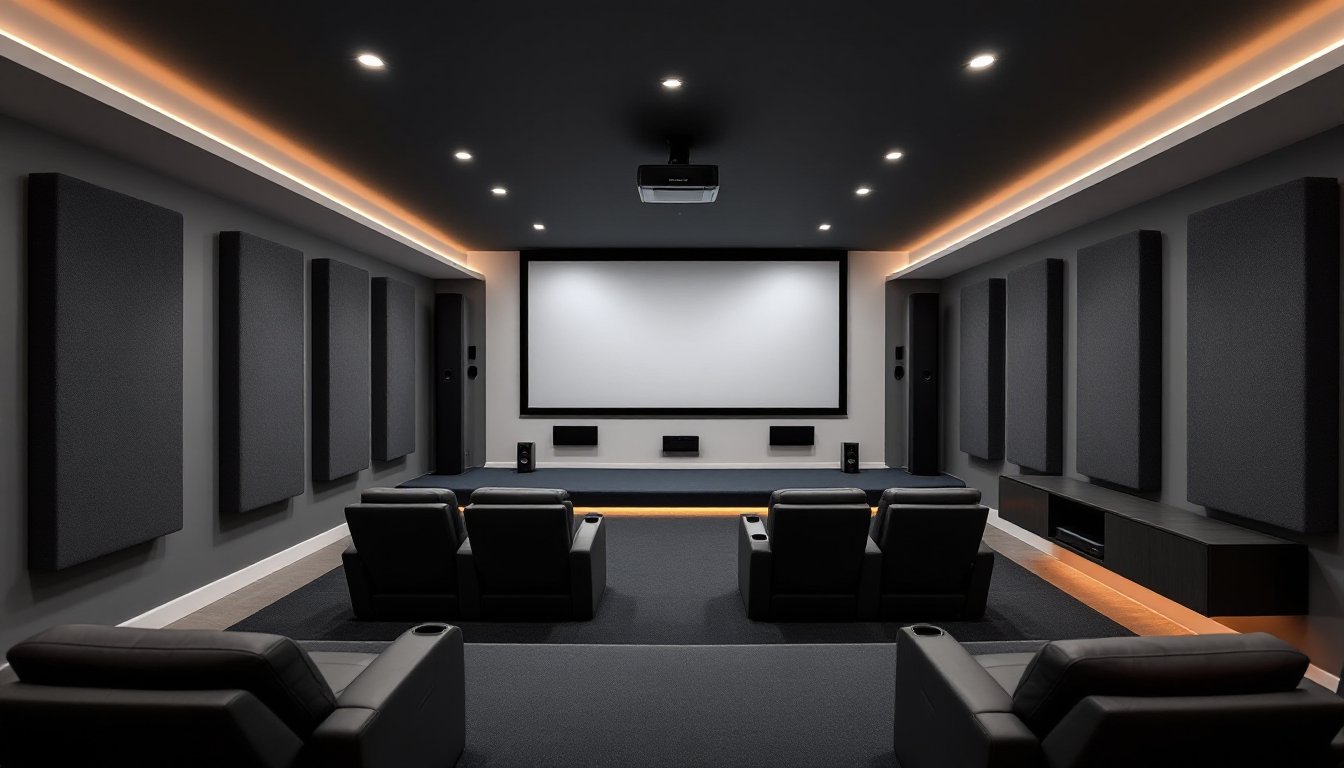
Bare drywall and hardwood floors reflect sound, creating echo and muddying dialogue. Add acoustic panels at first reflection points, side walls where sound from the front speakers bounces toward the listener. Panels should be 2 to 4 inches thick, filled with fiberglass or mineral wool (Roxul Safe’n’Sound is common), and wrapped in acoustically transparent fabric.
Bass traps go in corners where low-frequency energy builds up. These are thicker, 4 to 6 inches, and can be floor-to-ceiling or corner-mounted triangles. DIY builders can construct traps from 2×4 frames filled with Roxul and covered in burlap or stretch fabric.
For soundproofing (keeping sound in the room), add mass. A second layer of 5/8-inch drywall over existing walls, screwed into studs with Green Glue damping compound between layers, makes a measurable difference. Seal gaps around doors with weatherstripping and consider a solid-core door instead of hollow-core.
Lighting control is non-negotiable. Install dimmable LED fixtures or recessed cans on a dimmer switch. Avoid placing lights where they’ll reflect off the screen. Bias lighting, a diffused LED strip behind the TV, reduces eye strain without washing out the picture. Many home automation systems integrate smart home technology for scene control, but a basic dimmer works fine.
Wear safety glasses when cutting or drilling overhead. If working with fiberglass insulation for acoustic treatments, use gloves and a dust mask (N95 minimum).
Seating, Decor, and Finishing Touches
Theater seating isn’t required, plenty of great setups use a sectional or reclining sofa. If going dedicated, look for seats with cup holders and power recline. Measure seat width and row spacing: allow 36 to 40 inches per row for legroom and safe egress. Bolt riser platforms to the floor per code.
For a more budget-friendly home theater approach, quality doesn’t have to mean expensive, repurposed furniture and smart planning stretch dollars further. Focus spending on the screen and sound: seating can be upgraded later.
Carpet or thick area rugs over padding dampen floor reflections. Dark colors reduce light bounce. Avoid glossy paint on walls, use matte or eggshell finishes in dark gray, charcoal, or navy to minimize reflections.
Cable management keeps the room looking finished. Use cable raceways along baseboards or behind furniture, or fish cables through walls using a fish tape or wire snake. If running cable in walls, follow NEC Article 725 for low-voltage wiring, keep speaker and HDMI cables separated from AC lines to avoid interference.
Add storage for remotes, game controllers, and media. Floating shelves or a low console under the screen work well. Ventilation matters if equipment is enclosed, AV receivers generate heat. Leave 3 inches of clearance on all sides or add a USB-powered fan inside cabinets.
Consider blackout curtains or motorized shades if windows are present. Manual cellular shades provide good light blocking at lower cost than motorized options.
For hands-on builders looking to expand DIY skills, workshop tools and techniques offer guidance on everything from precise cuts to custom builds. Projects like building risers or acoustic panels require accurate measuring, solid joinery, and attention to load ratings, skills that carry over to other home improvement work.
Test everything before closing up walls or finalizing the layout. Play reference material, movies with clear dialogue, heavy bass, and dynamic range, and adjust speaker angles, subwoofer placement, and seating position as needed. Room correction software helps, but it can’t fix poor placement.