Table of Contents
ToggleBathrooms in West Shore homes often reflect the era when the community was built, functional but dated, with builder-grade fixtures and cramped layouts. A thoughtful remodel can transform a tired bathroom into a space that boosts daily comfort, home value, and resale appeal. Whether tackling a powder room refresh or a full primary suite overhaul, homeowners face decisions about layout, finishes, plumbing upgrades, and whether to swing a hammer themselves or call in the pros. This guide walks through the planning, design, and execution strategies that turn a West Shore bathroom from drab to functional, and sometimes even beautiful.
Key Takeaways
- West Shore bathroom remodels typically cost $15,000–$18,000 for mid-range projects and recoup 60–70% of costs at resale, making them a strong investment for Tampa Bay homeowners.
- A West Shore homes bathroom remodel should prioritize ventilation, water-efficient fixtures, and durable porcelain tile to combat Florida’s humidity and boost daily comfort.
- DIY projects work well for cosmetic tasks like painting and vanity swaps, but hire licensed professionals for plumbing relocations, electrical upgrades, and tile work to avoid costly code violations.
- Coastal modern and transitional styles dominate West Shore bathroom designs, featuring neutral base finishes with personality added through hardware and accessories rather than trendy tile or wallpaper.
- Installing LED lighting, low-flow toilets (1.28 GPF), and humidity-sensing exhaust fans reduces water and energy consumption by thousands of gallons and dollars annually.
- Check Hillsborough or Pinellas County permit requirements before starting—structural changes and plumbing work require permits that protect resale value and catch code violations early.
Why Choose a Bathroom Remodel for Your West Shore Home
West Shore homes, particularly those built between the 1970s and early 2000s, often feature small bathrooms with outdated tile, limited storage, and inefficient fixtures. A remodel addresses these pain points while offering a strong return on investment, typically 60–70% of project cost recouped at resale in the Tampa Bay region, according to recent market data.
Beyond resale value, a bathroom upgrade improves daily living. Replacing a water-guzzling toilet with a WaterSense-certified model saves roughly 13,000 gallons per year. Swapping dim overhead lighting for task lighting around mirrors makes grooming easier. Adding a ventilation fan (or fixing a broken one) prevents mold growth, a common issue in Florida’s humid climate.
Many West Shore bathrooms also lack accessible features. Retrofitting a curbless shower, wider doorways, or grab bars makes the space safer for aging-in-place homeowners and visitors with mobility challenges. If the home has only one full bathroom, upgrading it becomes a practical necessity rather than a luxury.
Planning Your West Shore Bathroom Renovation
Start with a clear scope. Walk the room with a tape measure and note what stays, what goes, and what moves. Relocating plumbing, especially the toilet or shower drain, adds cost and complexity. If the existing layout works, keep it. If not, budget for a plumber to reroute waste lines and vent stacks, which may require opening walls or ceilings.
Check with Hillsborough or Pinellas County (depending on your West Shore location) about permit requirements. Cosmetic work, new paint, vanity swap, fixture replacement on existing supply lines, typically doesn’t need a permit. But moving plumbing, rewiring circuits, or altering structural framing does. Pulling permits protects resale value and ensures inspections catch code violations before drywall goes up.
Measure twice. West Shore homes often have non-standard stud spacing or older framing lumber (actual 2×4s, not the nominal 1.5″ × 3.5″ used today). Verify wall depth before ordering a recessed medicine cabinet or in-wall toilet carrier. Double-check door swing clearance, building codes require a 21-inch minimum in front of toilets.
Setting a Realistic Budget
Bathroom remodels in the Tampa Bay area range from $8,000 for a basic refresh (new vanity, toilet, paint, and fixtures) to $25,000+ for a full gut job with custom tile, frameless glass shower, and high-end finishes. Mid-range projects typically land around $15,000–$18,000.
Break costs into categories:
- Materials: 40–50% (tile, vanity, toilet, tub/shower, fixtures, flooring)
- Labor: 35–45% (plumber, electrician, tile setter, drywaller)
- Contingency: 10–15% (hidden rot, plumbing surprises, material back-orders)
Prioritize spending on elements you touch daily, faucets, showerheads, lighting, and save on items like decorative tile accents or high-markup vanity upgrades. A $400 vanity with a quartz top often performs as well as a $1,200 model with similar dimensions.
If budget is tight, phase the project. Tackle plumbing and structural work first (the stuff behind walls), then finish cosmetic layers, paint, mirrors, hardware, over subsequent months.
Popular Bathroom Remodel Styles for West Shore Homes
West Shore homeowners gravitate toward styles that balance timeless appeal with regional practicality. Coastal modern leads the pack: white or light-gray cabinetry, subway or large-format tile, brushed nickel fixtures, and natural wood accents. It’s bright, easy to clean, and doesn’t clash with Florida’s abundant sunlight.
Transitional designs work well in homes with mixed architectural details, shaker-style vanities, neutral porcelain tile, frameless mirrors, and a blend of matte black and chrome finishes. This approach offers flexibility if the homeowner wants to shift decor over time.
For older West Shore properties with original charm, a modern farmhouse aesthetic can complement the home’s bones. Think board-and-batten wainscoting, freestanding tubs, Edison bulb sconces, and matte white tile with dark grout. Just avoid trends that date quickly, excessive shiplap or overly rustic barn doors lose appeal fast.
Whatever style is chosen, stick to neutral base finishes (white, gray, beige tile: classic subway or 12×24 porcelain) and inject personality through paint, hardware, and accessories. Trendy geometric tile or bold wallpaper can be swapped out: ripping out custom mosaic work can’t.
Key Features to Include in Your Bathroom Upgrade
Ventilation tops the priority list. Florida’s humidity breeds mold. Install a bathroom exhaust fan rated for the room’s square footage, typically 50–80 CFM for an 8×5 bathroom. Run the duct to the exterior (never into an attic), and consider a model with a built-in humidistat that auto-runs when moisture spikes.
Water-efficient fixtures cut utility bills and meet modern building codes. WaterSense toilets use 1.28 gallons per flush (vs. 3.5+ gallons in older models). Low-flow showerheads deliver 2.0 GPM or less without sacrificing pressure. Look for aerators on faucets, they mix air into the stream for a fuller feel at lower flow rates.
Storage solves clutter. Wall-mounted vanities with drawers (not doors) maximize usable space and make floor cleaning easier. Recessed shelves in shower niches keep shampoo bottles off the tub edge. Medicine cabinets with integrated lighting and outlets accommodate electric toothbrushes and razors.
Durable flooring matters in wet zones. Porcelain tile (not ceramic) resists moisture better and handles Florida’s temperature swings without cracking. Luxury vinyl plank (LVP) with a waterproof core offers a wood-look aesthetic at lower cost and easier DIY installation. Skip natural stone unless it’s sealed properly, travertine and marble etch from acidic cleaners.
Lighting layers improve function. A single overhead fixture leaves shadows at the mirror. Add sconces flanking the vanity mirror at eye level (about 60–65 inches off the floor) for even task lighting. Use LED bulbs rated 3000–4000K for accurate color rendering without the harsh blue cast of daylight bulbs.
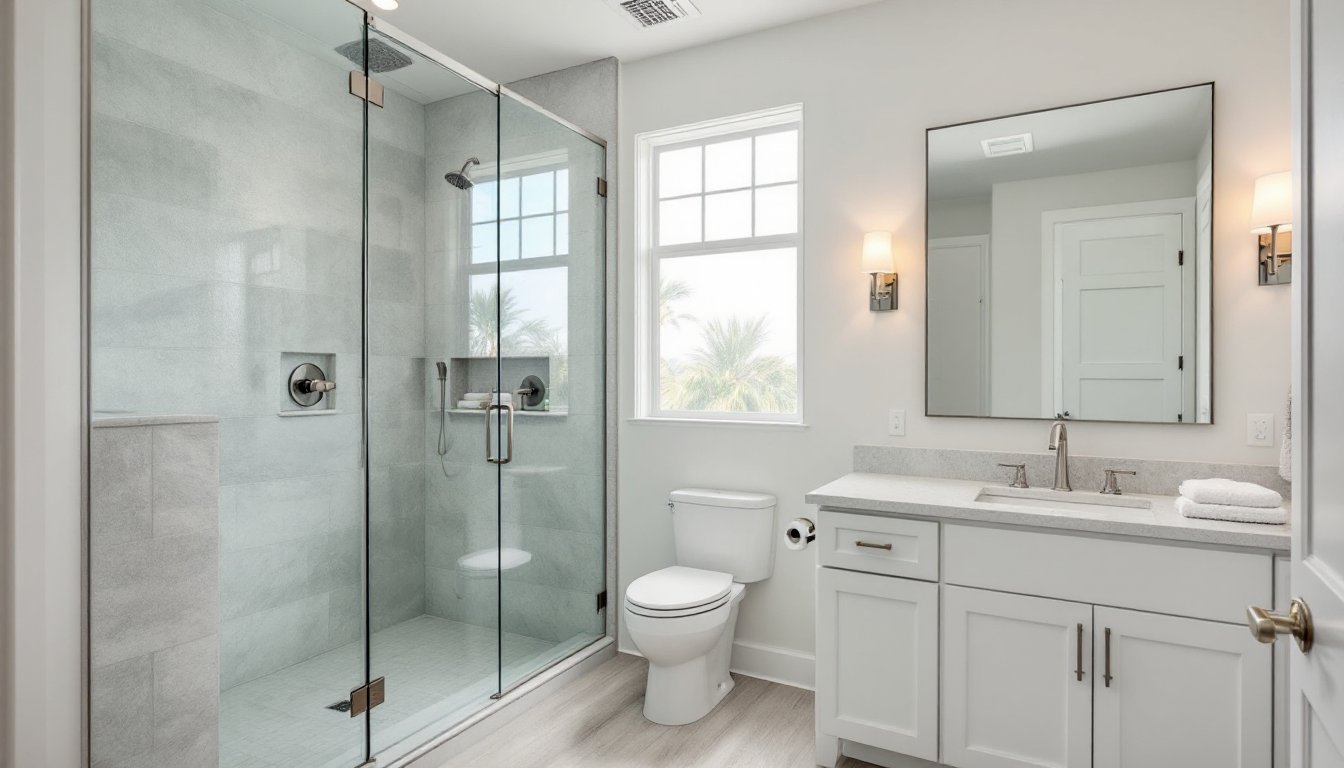
For showers, consider a curbless or low-threshold design with linear drains. They’re easier to clean, safer for all ages, and give a modern, spa-like feel. Pair with a handheld showerhead on a slide bar for flexibility.
DIY vs. Hiring a Professional Contractor
DIY makes sense for cosmetic work: painting, swapping vanities that use existing plumbing, installing new mirrors or lighting fixtures on existing boxes, and laying LVP flooring. These tasks require basic tools, drill/driver, level, utility knife, adjustable wrench, and modest experience. Expect to save 30–50% on labor costs by handling them yourself.
Hire pros for:
- Plumbing relocations or new rough-ins. Moving a toilet drain or installing a shower pan requires knowledge of slope, venting, and code compliance. Mistakes lead to leaks, mold, and expensive repairs.
- Electrical upgrades. Adding GFCI outlets, relocating switches, or installing a hardwired exhaust fan must meet NEC requirements. In Florida, many jurisdictions require licensed electricians for anything beyond simple fixture swaps.
- Tile work. Setting tile, especially large-format or subway with stacked patterns, demands skill in layout, mortar application, and waterproofing. Poor tile work telegraphs every flaw and fails within a few years.
- Structural changes. Removing walls, adding windows, or reinforcing joists for a heavy soaking tub requires engineering knowledge and permits.
For mid-range projects, a hybrid approach works: hire a licensed plumber and electrician for rough-in work, then DIY the finish carpentry, paint, and fixture installation. General contractors typically charge 15–20% markup on top of subcontractor fees, so managing subs yourself can save money, but it demands scheduling coordination and quality oversight.
Get multiple bids (at least three) and check references. Florida’s transient contractor market includes both skilled craftspeople and fly-by-night operators. Verify state licenses through the Department of Business and Professional Regulation and confirm liability insurance before signing contracts.
Maximizing Energy Efficiency in Your New Bathroom
An energy-efficient bathroom cuts utility bills and qualifies for occasional rebates through Tampa Electric or Duke Energy. Start with LED lighting, bulbs use 75% less energy than incandescent and last 15–25 years. Integrated LED vanity mirrors eliminate separate fixtures and reduce install labor.
Upgrade to a low-flow toilet and showerhead if current fixtures predate 2000. Replacing a 3.5 GPF toilet with a 1.28 GPF model saves 9,000+ gallons per year for a family of four. Pair it with a dual-flush mechanism (0.8 GPF for liquid waste, 1.28 for solid) for additional savings.
Install a programmable exhaust fan or one with a humidity sensor. It runs only when needed, cutting fan motor energy use by half compared to always-on models. Fans with Energy Star ratings use quieter, more efficient motors, typically under 1.0 sone at 80 CFM.
Consider a tankless or point-of-use water heater if the bathroom sits far from the main water heater. Long pipe runs waste water and energy while users wait for hot water. A small electric tankless unit mounted under the sink delivers instant hot water for handwashing without the standby losses of a tank heater.
Insulate exterior walls if opening them during the remodel. West Shore homes built before updated energy codes often lack wall insulation. Adding R-13 fiberglass batts or spray foam reduces heat gain in summer and keeps the bathroom comfortable year-round.
For those seeking home renovation inspiration, many design resources now emphasize sustainable materials, reclaimed wood vanities, recycled glass tile, and low-VOC paints. These choices improve indoor air quality and align with green building trends increasingly popular in interior design circles. Some homeowners also explore remodeling guides that detail energy-efficient fixture selection and weatherization techniques applicable to Florida’s climate.